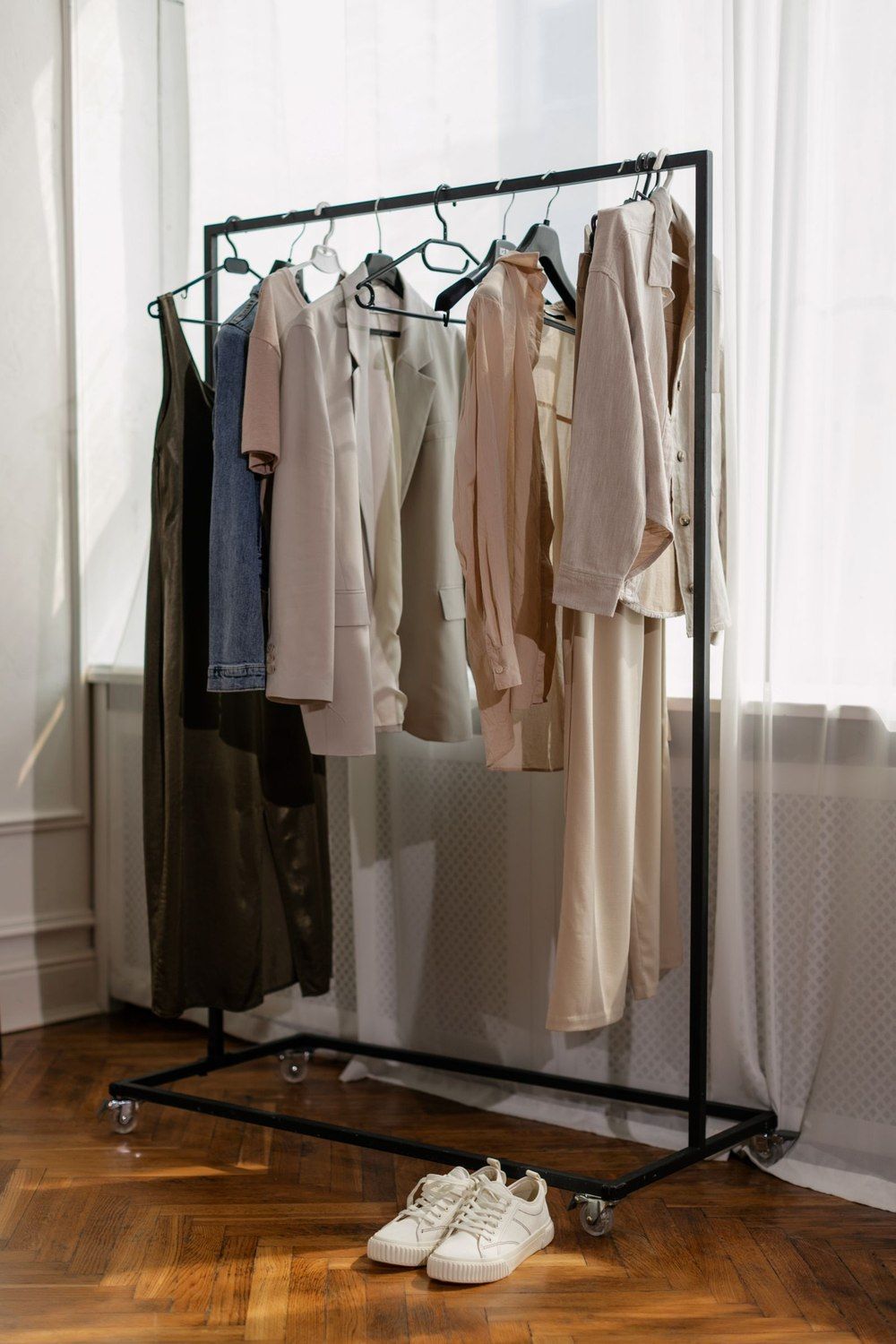
A closet full of clothes and nothing to wear is not a shopping problem — it is a matching problem. A capsule wardrobe fixes it: keep only pieces that work together, and a small rail produces weeks of outfits. This guide builds a 12-piece starter core that makes 24 distinct outfits — 30+ looks once shoes and accessories vary them. You will build it mostly from clothes you already own, with the outfit math done openly.
Choose a neutral palette, buy fit before trend and keep one or two fun pieces.
What a capsule wardrobe is — and where 12 pieces fits
The term appeared in American publications in the 1940s, was revived in the 1970s by Susie Faux of London boutique Wardrobe, who argued for timeless essentials topped up seasonally, and went mainstream in 1985 when Donna Karan released Seven Easy Pieces, a small set of interchangeable workwear. The best-known modern methods are bigger: Courtney Carver's Project 333 (2010) means 33 items or fewer for three months; Caroline Rector's Unfancy blog built 37-piece seasonal capsules. Round-ups of stylist advice usually land around 25 to 50 pieces per season. So be clear: 12 is a starter core, not a whole year-round wardrobe — your most-worn pieces, every top working with every bottom. Faux's own suggested minimum was strikingly close: two pairs of trousers, a dress or skirt, a jacket, a coat, a knit, two pairs of shoes and two bags.
Step 1: The audit — empty it out, sort honestly, box the rest
Do not start with a shopping list; start with evidence. Empty the whole wardrobe onto the bed, then ask three questions of each piece: Does it fit me now, not eventually? Have I worn it in the last three months, or would I wear it this month? Does it go with at least three other things here? Sort into four piles: yes to all three — capsule candidates; loved but rarely worn or off-season — the box; needs repair — a fix pile with a one-month deadline; no, and no love left — donate or sell. Then, borrowing Project 333's key move, seal the box pile away, out of sight, for the season. Nothing is thrown away; it is an honest trial. Pieces never reached for have given their answer; pieces missed twice earn their way back. Note why your most-worn pieces win — fit, fabric, colour — because they are the template later purchases are judged against.
Step 2: Lock the palette and plan around your real week
Pick two base neutrals you already wear most — black, navy, grey, camel, cream, denim blue — and allow one or two accents in tops, the dress or accessories, not in trousers. Plan against your actual week: five office days lean on blazer and trousers; a home-based week leans on the knits. Finally, face the laundry maths early: this core holds five tops, so a once-a-week wash means re-wearing knits and bottoms between washes — normal, and kinder to fabrics — plus one small mid-week wash for tops, or top repeats. If that sounds miserable, your first planned expansion is two or three extra tops — the capsule working as designed, not failing.
The 12 pieces, specified
1–2. Two bottoms. Dark, straight-leg jeans, no distressing — dark denim dresses up furthest — in mid-weight denim with a little stretch. Tailored trousers in your base neutral, hemmed to sit cleanly over both shoe pairs. Both must sit comfortably, with no adjusting all day. 3–5. Three tops. A white or cream tee in substantial, not-see-through cotton; a neutral long-sleeve top fine enough to layer under knits; one shirt or blouse tucking into both bottoms and working under the blazer. 6–7. Two knits. One fine merino-blend knit, thin enough to wear alone, layer under the blazer and pull over the dress. One chunkier knit for cold days, with bottoms only. 8. A blazer in a base neutral, half-lined so it layers over the fine knit. 9. A coat that closes over your thickest knit — test this; one that only fits over a tee is a spring coat. In mild climates, a trench or heavy overshirt. 10. One dress solid palette colour, knee to midi, in a fabric that takes a belt, the blazer and the fine knit over it. 11–12. Two pairs of shoes. One comfortable everyday pair — clean trainers or loafers — and one smarter pair, ankle boots or a polished flat, that lifts trousers and dress. Underwear, sleepwear and gym kit sit outside the 12, as in Project 333.
The outfit math, shown honestly
Your wearable tops are five, not three: the three tops plus both knits, each worn on its own. Five tops × two bottoms = 10 base outfits. Each can be worn plain or with the blazer: 10 × 2 = 20 distinct outfits. The dress adds four: on its own, with the blazer, with the coat, and with the fine knit over it so it reads as a skirt and top. That is 24 distinct outfits from 12 pieces. Two honest limits: the coat is not multiplied across every outfit — it is weather-dependent outerwear worn over an outfit, not a new outfit; and shoes do not double the total — they change an outfit's level (trainers casual, smarter shoe evening-ready), not its identity. Add shoe swaps, a belt and a scarf, and the 24 present as 30+ looks — what the headline promises. One rule protects the arithmetic: anything joining must pair with at least three pieces already in.
Step 3: The one-week test, then fill gaps slowly
Before buying anything, wear only your 12 for seven days — you will learn more than in a month of planning. Keep reaching into the box for one piece? It belongs in the core: swap it in, weakest piece out. A piece unworn and unmissed all week was never capsule material. Most people also discover their real uniform — the two or three combinations they happily repeat. Only now write the gap list, your only shopping list: when a sale arrives, you shop the list, not the trends — the plan in our Black Friday guide. Fill gaps one or two pieces per season; buying all 12 in one weekend is the fastest route to a capsule that feels like someone else.
Seasonal swaps, climate and working from home
Keep two-thirds of the core year-round — bottoms, tee, shirt, blazer, dress, shoes — and rotate the rest. For summer, swap chunky knit and coat for a linen shirt and light trousers or shorts (see our summer outfit guide); the dress works harder, the fine knit covers air-conditioning. For winter, add a thermal base under the tops and layer the coat properly — the system in our winter outfit formula. Hot climate: drop the coat to a light overshirt, choose cotton or linen, and let laundry set your top count. Cold climate: upgrade coat and boots first; the chunky knit is non-negotiable. Working from home: the fine knit and shirt do the on-screen work, the blazer hangs ready for meetings, and tailored trousers can swap for a second pair of jeans. Very formal dress codes are the one case where 12 alone is not enough — add a small work mini-capsule alongside rather than diluting the core.
Care and cost per wear: making 12 pieces last
On rotation, twelve pieces get worn and washed far more than a crowded wardrobe, so care makes the economics work. Wash less: knits and trousers usually need airing, not washing, after a wear, and spot-cleaning beats a full cycle. Wash cold on a gentle cycle, inside out, and air-dry where the label allows — heat and tumbling age fabrics fastest. Fold knits rather than hanging them, and rest shoes a day between wears. Judge every future purchase by cost per wear: price divided by the number of times you will realistically wear it. A blazer bought for 120 and worn 100 times costs 1.20 per wear; a trendy top bought for 30 and worn three times costs 10 per wear. Budget rule: spend most on weekly wear — shoes, jeans, coat — less on dress and accents, consider second-hand for blazers and coats, and replace pieces one at a time as they wear out.
Mistakes that shrink a capsule
Four traps recur. Choosing a palette you admire on others but never wear — build from colours in your most-worn pile. Copying a list built for a different climate or dress code, then blaming the method when a linen capsule meets a cold winter. Filling slots with high-maintenance pieces: anything needing ironing before every wear, special underwear or constant adjusting works against easier mornings. And treating 12 as a moral target — keeping a hated piece to hold the number, or refusing a needed thirteenth. The number serves the life, never the reverse.
Quick questions
How many pieces should a capsule wardrobe have? None exists. Project 333 uses 33 items for three months, Unfancy used 37 per season, guides commonly cite 25 to 50. This guide's 12 is a starter core, not the standard size. What is the difference between Project 333 and a capsule wardrobe? The capsule is the general idea; Project 333 is Carver's challenge version — 33 or fewer, three months, the rest boxed away. Do shoes and accessories count? In Project 333, yes — shoes, accessories, jewellery and outerwear count; underwear, sleepwear, loungewear, workout clothes and never-removed sentimental jewellery do not. This core counts shoes; scarves, belts and bags are uncounted extras. Will people notice I am repeating outfits? Carver reports people do not notice repetition — though they may notice you look more put-together. Shoe and accessory changes vary the rest. Does a capsule have to be all neutral and boring? No. Neutrals do the matching work; one or two accents — dress, top, scarf — keep it personal. What breaks a capsule is colour that pairs with nothing else. How do I start if my closet is completely full? With the audit, not a clear-out: sort with the three questions, box the maybes out of sight for a season, and donate only after the box sat unopened. Can one capsule cover work and weekends? Usually, yes: blazer and smarter shoes dress the pieces up; tee and trainers dress them down. Only very formal dress codes need a separate work capsule.
Sources and further reading
Written by the Trendora Editorial Team. Sources: Courtney Carver, Be More With Less — official Project 333 rules, counts and exclusions (https://bemorewithless.com/project-333-challenge/); Wikipedia, "Capsule wardrobe" — 1940s origins, Faux's revival and minimum, Karan's 1985 Seven Easy Pieces (https://en.wikipedia.org/wiki/Capsule_wardrobe); The Capsule Report, "How Many Items Should Be in a Capsule Wardrobe?" (https://www.thecapsulereport.com/blog/how-many-items-capsule-wardrobe); Fitwardrobe, "How Many Pieces in a Capsule Wardrobe?" (https://fitwardrobe.me/blog/how-many-items-capsule-wardrobe/). Our rule for every Trendora wardrobe guide: it has to work with a normal closet, a normal budget and a normal Tuesday morning.
General information only, not professional or medical advice.