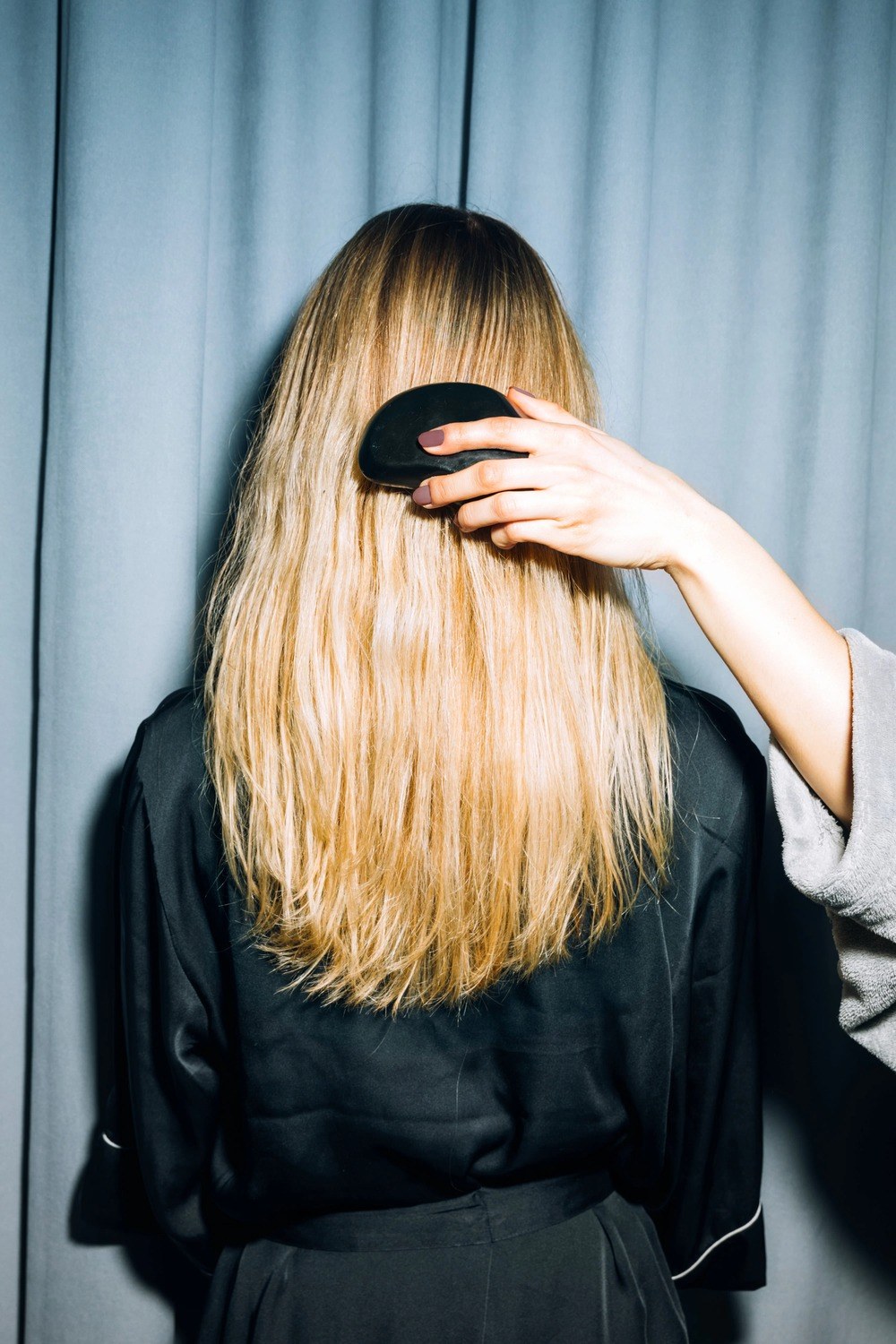
Winter is hard on hair for a simple reason: hair constantly trades moisture with the air around it, and winter air — cold outside, heated dry inside — has very little moisture to give. Strands lose water, turn rough and staticky, and snap at the ends, while hats and scarves rub the same spots all day. The good news: winter hair trouble is mostly physics, not damage destiny. Once you know which lever does what — wash frequency, conditioner placement, friction, indoor humidity — a calm routine fixes most of it. Here it is, checked against dermatologist guidance and the hair-science research.
Wash less often, condition every time, oil the ends once a week, and let hair dry most of the way before brushing.
Why winter hair misbehaves
Three separate problems get bundled together as "winter hair," and each has its own fix. Dryness. Hair does not hold a fixed amount of water; it takes up and gives off moisture depending on the air. Cold outdoor air carries little water, and heating dries indoor air further — the Mayo Clinic notes that central heating, space heaters and fireplaces all lower indoor humidity. Static. Static is an electrical problem, not a damage problem. When hair rubs against a hat, scarf or brush, it gives up electrons and ends up positively charged — and strands carrying the same charge push each other apart, which is why hair lifts, crackles and clings to your face. In humid air that charge leaks away in seconds; in dry winter air it has nowhere to go. That is why static hits healthy hair too. Breakage. The ends are the oldest, most worn part of every strand, so they fail first. Winter adds friction (hats, collars, scarves) and one hidden factor: wet hair is mechanically weaker than dry hair. In lab tests, soaked hair breaks under less pulling force and snags more, so rough handling while wet — hard towel rubbing, ripping a brush through it — does outsized damage.
How often to wash in winter — by hair type
The old advice was a flat "wash less in winter." Dermatologists are more specific: the American Academy of Dermatology (AAD) says wash frequency should follow how oily your scalp gets and what your hair is like — not the calendar: Straight or fine hair, oily scalp: every day to every other day is fine — the AAD is clear that daily washing does not damage healthy hair. Normal, medium hair: every two to three days is the common sweet spot — in winter, the longer end of that range usually works. Thick or dry hair: once or twice a week suits most people. Curly and coily hair: once a week to once every two weeks. The AAD's guidance for Black hair is to wash once a week or every other week and condition every time — with a minimum of one wash every two to three weeks for scalp health. One warning in the other direction: if you develop flakes after cutting back washes, the AAD flags not shampooing often enough as a common cause. Winter flakes are often an under-washing problem or plain dry scalp.
How to wash and dry without breakage
Shampoo the scalp, not the lengths. Massage shampoo into the scalp where the oil is, and let the rinse carry it through the ends. Condition every single wash, and place it by type. The AAD advises conditioner after every shampoo. On fine or straight hair, keep it on the ends only; on dry or curly hair, work it through the full length. Use the two-minute rule. Leave conditioner in for a couple of minutes while you finish your shower. Conditioner is also your main anti-static tool — it lowers friction and helps charge drain off the hair. Protect dry ends before you start. Smooth a little conditioner over very dry ends before shampooing, so the lengths are shielded while you wash. Rinse lukewarm, not hot. Hot water lifts the hair cuticle and lets more moisture escape — the same reason hot showers dry out skin. Our winter skincare routine covers that side of the problem. Dry gently. The AAD suggests wrapping hair in a towel to absorb water instead of rubbing it. If you blow-dry, use the lowest heat that works, keep the dryer moving and at a distance — one lab study (Lee et al., Annals of Dermatology, 2011) found drying at about 15 cm with continuous movement caused less surface damage than leaving hair wet for hours, because wet hair stays swollen and fragile. Gentle, distant, moving heat beats both scorching heat and an afternoon spent soaking wet.
The weekly oil and mask habit — what the evidence actually says
Hair oiling is one of the few viral habits with real research behind it. The best-known study (Rele & Mohile, Journal of Cosmetic Science, 2003) compared coconut, sunflower and mineral oil on hair samples in a lab. Coconut oil was the only one that measurably reduced protein loss from damaged and undamaged hair, used before or after washing — linked to its main fatty acid, lauric acid, whose small, straight shape lets it get inside the hair shaft instead of only coating it. Less protein lost in the wash means strands wear out more slowly. Just as important is what oil does not do. Shedding happens at the root, inside the follicle, and no oil changes that — oiling cannot stop hair fall from genes, hormones, illness or stress. It reduces friction so hair snaps less when combed, which often looks like less hair fall. How to do it: once a week, warm a few drops of oil in your hands and smooth it over the mid-lengths and ends — not a full scalp soak, which only suits thick, very dry hair. Leave it 20 to 30 minutes before washing (overnight is tradition, not a requirement). If your hair hates oil, a weekly deep-conditioning mask does a similar job — pick one habit, not both. It also made the worth-it list in our round-up of viral glow-up habits.
Static and hat hair, fixed
Because static is charge plus friction, every fix works by adding moisture, cutting friction, or both: Leave-in conditioner is the dermatologist-backed fix. The AAD specifically recommends leave-in conditioners for managing static and flyaways. A pea-sized amount over dry flyaways settles them in seconds; a drop of oil does the same job. Fix the air, not just the hair. A humidifier attacks the root cause. The US Environmental Protection Agency suggests indoor humidity between 30 and 50 percent — heated winter rooms often sit well below that. Line the hat. A silk or satin lining cuts friction. Loosely braiding long hair before the hat goes on stops most tangles, and keep the fit loose — the AAD cautions that constant rubbing from tight coverings, worn the same way daily, can contribute to traction problems at the hairline. Comb, don't brush. Brushing dry, staticky hair adds charge. A wide-tooth comb on mostly dry hair is kinder; detangle in sections, from the ends up.
Fine hair and curly hair tweaks
Fine hair: oil and masks weigh you down fast, so use half the amount, on the last few inches only. A lightweight leave-in spray usually beats a heavy cream, and conditioner belongs on the ends, not the roots. Fine hair shows static the most — the spray earns its keep twice. Curly and coily hair: you usually want the opposite — more moisture, not less. Add a richer mask to the weekly slot, refresh curls between washes with a water-and-conditioner spritz, and sleep on a satin pillowcase or bonnet to cut overnight friction.
Winter hair mistakes to skip
Daily heat styling through the cold months. If you use heat: lowest effective setting, heat protectant on, dryer moving. Skipping conditioner to "avoid greasy hair." Placement is the fix — ends only for fine hair — not skipping it. Cutting washes so far back that your scalp flakes. Flakes after a schedule change usually mean wash a little more often, not less. Going out with dripping-wet hair and a tight hat. Hair only freezes in deep sub-zero cold, but wet hair is at its weakest — rough hat handling on damp hair is the real risk. Rubbing hair dry with a rough towel. Wrap and press instead.
When to see a dermatologist
Some shedding and dryness in winter is normal. Book a dermatologist — not a new product — for bald patches, a sore or painful scalp, breakage that keeps worsening despite gentle care, or shedding with other symptoms. The Mayo Clinic's hair-loss guidance makes the same point: pattern changes and scalp symptoms are medical questions.
Quick questions
How often should I wash my hair in winter? It follows your scalp and hair type, not the season alone. Oily, straight hair can still be washed daily to every other day; normal hair does well every two to three days; dry, curly and coily hair often needs only once a week or less — but at least every two to three weeks for scalp health (AAD). Why is my hair so staticky in winter, and what stops it fastest? Rubbing against hats, scarves and brushes charges your hair, and dry heated air cannot carry the charge away, so strands repel each other. Fastest fix: a pea-sized amount of leave-in conditioner over the flyaways. Lasting fixes: condition every wash, and raise indoor humidity toward the EPA's 30–50% range. Does cold weather cause hair loss? Cold air itself does not damage the follicle or cause hair loss. Winter shedding complaints are usually breakage — dry ends snapping — plus normal seasonal shedding. Bald patches, scalp pain or rapidly worsening loss are different: see a dermatologist. Can I go outside with wet hair in winter? Hair can freeze in deep sub-zero temperatures, but for most winter days the real issue is that wet hair is weaker and snags more, so a rough hat on dripping hair causes breakage. Dry most of the way before heading out. Does hair oiling actually work? Partly, and the evidence is specific: in lab tests, coconut oil reduced protein loss from hair during washing (Rele & Mohile, 2003), protecting strands from wear. Oil does not stop shedding from the root or grow new hair. Use it on the lengths 20–30 minutes before a wash, weekly. Why is my scalp flaky in winter — is it dandruff? Often it is dry scalp or under-washing: the AAD notes flakes can mean you are not shampooing often enough. Try washing a little more frequently first. Flakes with itching, redness or thick scales may be dandruff — a medicated shampoo or a dermatologist is the next step. My hands and heels are dry too — is it the same fix? Mostly, yes: gentle care plus rich moisture on damp skin. Our body care basics cover the neck-down version.
Sources and further reading
Written by the Trendora Editorial Team. Sources and further reading: the American Academy of Dermatology — "Tips for healthy hair" (https://www.aad.org/public/everyday-care/hair-scalp-care/hair/healthy-hair-tips) — wash frequency, conditioner placement, leave-in conditioner for static; the Mayo Clinic (https://www.mayoclinic.org) on indoor heating, humidity and when hair loss needs a check-up; Rele & Mohile, "Effect of mineral oil, sunflower oil, and coconut oil on prevention of hair damage," Journal of Cosmetic Science, 2003; Lee et al., "Hair Shaft Damage from Heat and Drying Time of Hair Dryer," Annals of Dermatology, 2011; the US Environmental Protection Agency (https://www.epa.gov) on indoor humidity of 30 to 50 percent.
General information only, not professional or medical advice.