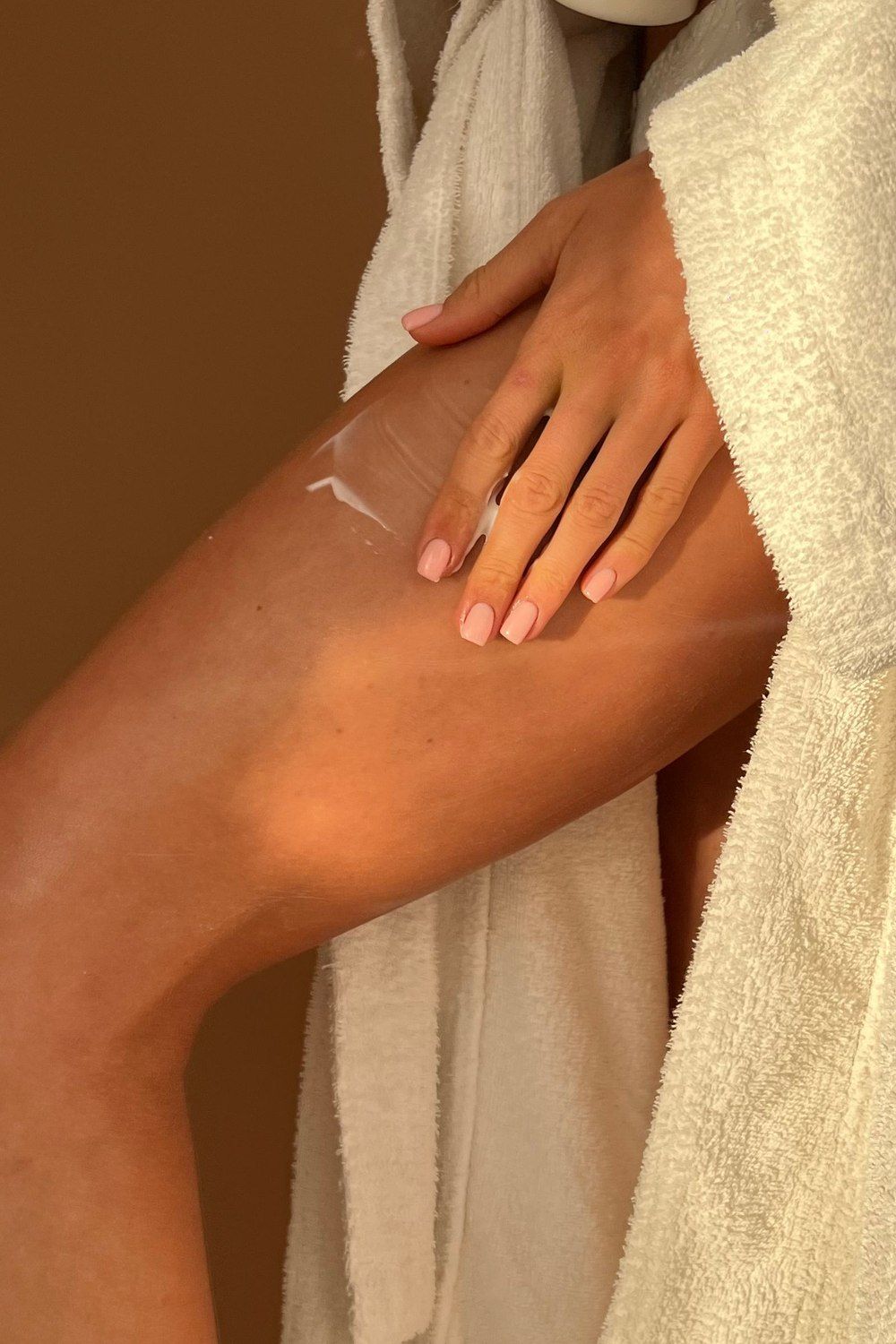
Body skin gets a fraction of the attention the face gets — a quick wash, whatever lotion is nearby, and done. Then elbows go rough, shins turn ashy, heels crack, and the backs of the arms develop those tiny stubborn bumps, and it feels like it happened overnight. It did not. Body skin responds to exactly two things done consistently: gentle, occasional exfoliation and moisturizer applied at the right moment. This guide builds the whole routine — the shower itself, the weekly scrub, the daily moisture, and the specific fix for bumpy upper arms — using dermatology guidance rather than product hype.
Short, warm showers. A gentle scrub once a week. Moisturizer on damp skin within about five minutes of every shower. That is 90% of body care.
Start with the shower itself
The most common cause of dry body skin is not a missing product — it is the shower. The American Academy of Dermatology (AAD) advises keeping showers and baths short, about 5 to 10 minutes, in warm water rather than hot. Hot water and long showers strip the natural oils that hold moisture in your skin, which is why skin can feel tight and itchy straight after a "clean" shower. Use a gentle cleanser, and only where you need it — armpits, groin, feet and skin folds; most of your body rinses clean with water and the friction of your hands. Then pat dry, leaving skin slightly damp. That dampness is not a detail; it is the raw material the next step seals in.
The weekly scrub, done properly
Once a week, in the shower after washing, apply a gentle scrub with small, circular motions and a light hand — about 30 seconds per area is the AAD's guidance, and pressure is not what makes it work. Work over elbows, knees, heels and anywhere skin feels rough; go lighter on the chest, neck and inner arms, where skin is thinner. Rinse with lukewarm water. Technique matters more than force: stop if skin stings or goes red — irritation is a sign to scrub less often, not a sign it is working. Keep scrubs off broken, sunburned or freshly shaved skin entirely, and never scrub over an eczema or psoriasis flare. If you shave, exfoliate before shaving, not after — it lifts hairs and gives a closer shave without grinding product into just-shaved skin. How often, honestly? The AAD's rule is that frequency depends on your skin type and your method — the more aggressive the exfoliation, the less often you should do it. In practice: dry or sensitive skin, once a week at most, and many people do better with a soft washcloth and no scrub product at all; normal skin, once or twice a week; oilier, thicker skin, up to two or three gentle sessions. More is not better — over-exfoliating strips the barrier you are trying to protect, and dermatologists also caution that harsh scrubbing can trigger dark marks, especially on deeper skin tones. What about dry brushing? It is popular, and a soft brush used gently on dry skin before a shower will not harm most people — but be honest about the evidence: there is little research behind the glow and circulation claims made for it. Treat it as an optional ritual you enjoy, not a treatment, keep the pressure light, and skip it on sensitive or irritated skin.
Daily moisture: the five-minute rule
Apply moisturizer right after showering, while skin is still slightly damp — within about five minutes is the dermatologists' rule of thumb — and it seals in water your skin already has. Lotion spread over bone-dry skin an hour later seals in almost nothing, which is why the same product can seem useless in one routine and brilliant in another. Use more than you think on shins, elbows and heels — the driest zones tend to get the leftovers otherwise. And choose the right thickness: lotions are thinnest, creams are richer, and ointments are the most effective of all at holding water in. In winter, swap a light lotion for a cream: creams hold up better against cold air and indoor heating, and for cracked heels or stubborn dry patches, an ointment-style product at night beats any lotion.
Layering: when lotion alone is not enough
Most days, a single layer of moisturizer is plenty. But on very dry days — or when a patch just will not settle — one layer can run out of work before it has sealed anything in. The fix is to layer: apply a light body oil first, while skin is still damp, then follow with your usual cream on top. The oil adds its own light film, and the cream on top locks both the oil and the water underneath it in place. For cracked heels, a version of "slugging" helps: a thick ointment or plain petrolatum applied heavily to the heels at night, then covered with cotton socks until morning. The socks hold the ointment in place and off your sheets, and heels wake up softer. One honest note: layering is for the worst patches, not an everyday requirement — normal skin does fine with a single, well-timed layer of cream.
Choosing a scrub and a moisturizer
For scrubs, sugar and enzyme formulas sit at the gentle end and coarse salt scrubs at the strong end — start gentle, especially on the chest and inner arms. Chemical exfoliants (the kind with lactic or glycolic acid) are an alternative to grains, and the AAD notes that dry or sensitive skin may actually do better with a mild chemical exfoliant or a plain washcloth than with a rough mechanical scrub. For moisturizers, read the first ingredients: glycerin and hyaluronic acid pull water in (humectants), while shea butter, ceramides and petrolatum keep it there (barrier ingredients). A good everyday cream usually has one of each. Fragrance is the most common reason a body lotion stings — if yours does, go fragrance-free before you go expensive.
The bumps on your upper arms: keratosis pilaris
Those tiny, rough, sandpaper bumps on the backs of the arms and thighs have a name — keratosis pilaris — and they are extremely common and harmless: keratin plugs in the hair follicles, usually worse in winter when skin is dry. Three honest facts from the AAD: you cannot scrub them away (hard scrubbing makes them worse), there is no cure, but a maintenance routine smooths them visibly. The AAD's routine: exfoliate gently, use a cream containing a keratolytic — an ingredient that loosens the plug, such as urea or lactic acid (glycolic acid and salicylic acid also qualify) — and moisturize with a thick cream or ointment rather than a thin lotion, applied to damp skin within five minutes of bathing and again whenever skin feels dry. Give it four to six weeks; if there is no improvement by then, that is the AAD's checkpoint for seeing a dermatologist.
A simple weekly schedule
Sunday: the reset — scrub, then moisturizer all over, plus thick cream and socks for your feet. Monday to Saturday: moisturizer after every shower, hand cream before bed. Wednesday: a two-minute midweek check — heels, elbows and knees get extra cream if they feel rough. That is the whole system. If it is your face that is dry and flaky, that is a different routine: our 7-day reset plan handles faces gently, step by step.
Small upgrades, big difference
Keep a hand cream by the bed, use a pumice stone gently on heels once a week, and keep a small lotion in your bag for dry days. None of this takes more than a few minutes, and skin stays soft between scrubs. Two zones people forget: the neck and chest, which dry out just like the face — moisturize them daily, and give them sunscreen on bright days (our sunscreen rules cover how much). In deep winter, if lotion alone stops being enough, layer it the way our winter routine does for the face: a hydrating layer first, a richer cream on top. And the glow itself is simple — smooth, well-moisturized skin reflects light evenly, so exfoliation plus moisture really is the whole secret.
Body care through the seasons
The same skin needs different care depending on the season. In summer, the main issues are sweat and chafing rather than dryness: switch to a lighter lotion so skin does not feel greasy under clothes, and use a powder or anti-chafe balm anywhere skin rubs against skin or fabric — inner thighs, underarms, under the bust. Sunscreen belongs on exposed body skin too, not just your face, on bright days. If you swim, rinse off afterward — chlorine and salt water both pull moisture out of skin, and rinsing limits the damage. Winter works the opposite way: cold air outside and dry, heated air indoors both pull water out of skin faster than summer does. Switch your lotion to a richer cream, keep showers shorter and a little cooler than you are tempted to run them, and if the air in your home is very dry, a humidifier can make a real difference. For the face specifically, our winter routine covers the same cold-weather layering in more depth.
Five mistakes that keep body skin dry
Long, hot showers. The single biggest cause — shorten them and turn the temperature down before you buy anything. Scrubbing daily, or scrubbing harder to fix bumps. Both damage the barrier; KP in particular gets worse, not better. Moisturizing dry skin, later. The five-minute, still-damp window is where moisturizer earns its keep. Using a thin lotion on a cream's job. Cracked heels and KP need creams or ointments, not lotion. Scrubbing sunburned, broken or just-shaved skin. All three are hard stops, every time.
Quick questions
How often should I exfoliate my body? For most people, once a week is enough; the AAD ties frequency to skin type and method — the stronger the method, the less often. Dry or sensitive skin may do best at once a week with something gentle, or with a washcloth alone; oilier skin can usually handle two or three gentle sessions. Why does my skin drink lotion and still feel dry? Usually timing, not the product: lotion on bone-dry skin seals in very little. Apply on damp skin within about five minutes of showering, shorten the hot showers that caused the dryness, and switch from lotion to a cream — or an ointment on the worst patches — in winter. What are the tiny bumps on my upper arms, and how do I smooth them? Most likely keratosis pilaris: harmless keratin plugs, worse in winter. Do not scrub them hard. Use a urea or lactic acid cream, moisturize thickly on damp skin, and give it four to six weeks — if nothing improves, see a dermatologist. Should I exfoliate before or after shaving? Before. It lifts the hairs and clears dead skin so the razor glides; scrubbing freshly shaved skin is an irritation shortcut. Can I use face products on my body? You can, and they work — it is just an expensive way to cover a lot of skin. A good body cream with the same key ingredients does the same job for a fraction of the price. The one exception: keep harsh face scrubs off the body routine and body scrubs off your face — facial skin is thinner and less forgiving. Is dry brushing actually worth it? As a ritual, if you enjoy it and keep it gentle. As a treatment, the evidence is thin — dermatology sources do not back the stronger claims made for it. Your scrub-plus-moisturizer routine does the proven work. When should I see a dermatologist instead? If dryness comes with cracking, bleeding, intense itching that keeps you awake, patches that do not respond to a few weeks of gentle care, or bumps that do not improve after four to six weeks of the KP routine. Body care handles the everyday; those signs deserve a professional. Does drinking more water fix dry skin? Mostly a myth. A 2015 study found extra water mainly helped people who were already drinking very little, and a 2018 review of the research found the overall evidence weak. A moisturizer does the direct work water alone cannot — it seals moisture into skin, while water you drink is used throughout your whole body. Drink enough for your health, but do not expect a few extra glasses to replace moisturizer. (Our 7-day meal plan covers how much water to aim for daily.) How long until my skin looks better? About 2 to 4 weeks of a consistent routine — short showers, weekly gentle exfoliation, moisturizer within five minutes of bathing — makes a visible difference for most people. Keratosis pilaris takes longer, as noted above: give it the full 4 to 6 weeks before judging it. If nothing has changed after that window, the fix is usually a different product, not more scrubbing.
Sources and further reading
Written by the Trendora Editorial Team. Sources and further reading: American Academy of Dermatology — "How to safely exfoliate at home" (https://www.aad.org/public/everyday-care/skin-care-secrets/routine/safely-exfoliate-at-home), "Dermatologists' tips for relieving dry skin" (short warm showers, moisturize while damp), and "Keratosis pilaris: self-care" (urea/lactic acid creams, thick cream or ointment, the 4-to-6-week checkpoint) — https://www.aad.org; the NHS (https://www.nhs.uk) — dry skin care and emollient guidance.
General information only, not professional or medical advice.