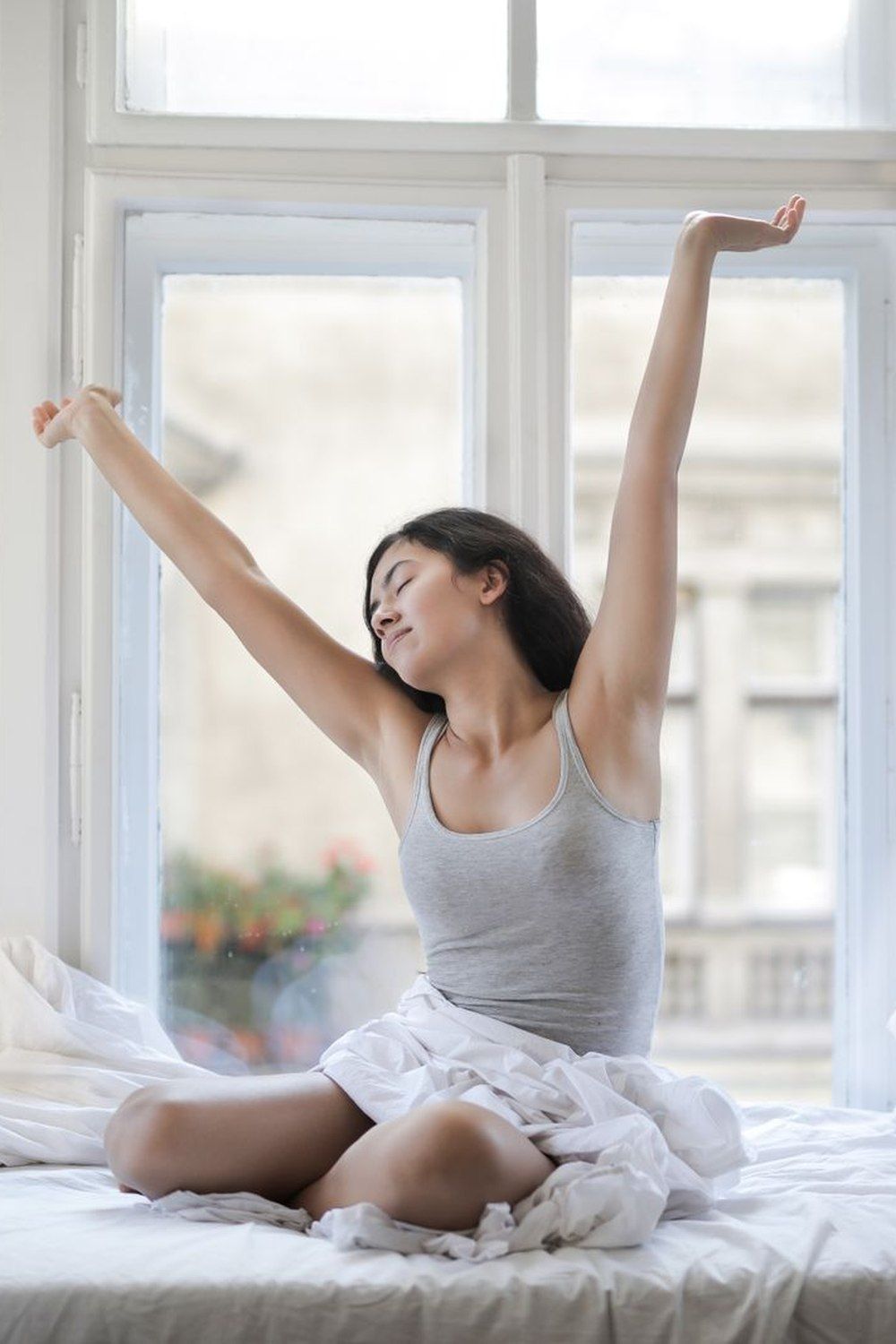
Most viral habits are old advice in new packaging, and some are genuinely useful. The problem is telling them apart before you spend money, time or — occasionally — your health on the wrong ones. So we keep re-checking the feed. This edition re-judges the habits from our first round-up against the newest evidence (two have had proper scientific reviews published since, and both verdicts moved), then takes on the biggest glow-up trends of 2026: sleepmaxxing, fibermaxxing, Japanese walking and the Winter Arc. Every verdict is our editorial judgement of the published evidence, not medical advice — and where the evidence is thin, we say so.
Focus on sleep, daily movement and balanced meals before trying anything fancy.
How to test a viral habit
Give any new habit two honest weeks and one simple measure — a photo, a note on energy, or how your skin feels. Write the measure down before you start, not after — memory edits results kindly. And test one habit at a time: change three things at once and you will never know which one worked, which is how people end up keeping expensive routines that do nothing.
The returning habits, re-judged
Mouth tape — SKIP, and the case against it is now formal. In our first edition we said "little evidence it helps." Since then, a 2025 systematic review in PLOS One (Rhee and colleagues) gathered all ten published studies on mouth taping for sleep-disordered breathing — 213 patients in total — and concluded the data does not support it for the general population. Every study was rated poor quality, and four of the ten flagged a serious risk of asphyxiation if the mouth is sealed while the nose is blocked by a cold, allergies, a deviated septum or reflux. The American Academy of Sleep Medicine had already called the trend dangerous. If you snore heavily or wake gasping, that is a sleep-clinic question, not a tape question. Ice baths and cold plunges — OPTIONAL, with one timing rule. The evidence sharpened in 2025. A network meta-analysis of 55 randomized trials found cold-water immersion genuinely reduces muscle soreness in the first day or two after hard exercise. But a separate 2025 meta-analysis in PLOS One (11 trials, 3,177 people) found the broader claims mostly unsupported — stress was lower at exactly one measured time point (12 hours after), and inflammation markers actually rose right after immersion. And the catch lifters need: a 2024 meta-analysis confirmed plunging straight after strength training modestly blunts muscle growth. So: fine as an occasional soreness tool, keep it away from the hours after lifting, and skip it with heart or blood-pressure concerns. Face icing is the gentler cousin — skin looks tighter and less puffy for a short while, then it fades. Optional; misery is not a skincare step. Gua sha — FINE as a massage; the reshaping claims are still not supported. One small update in its favor: a 2025 randomized trial in the Journal of Cosmetic Dermatology measured facial-contour changes of about 2.2 to 2.4 mm after eight weeks of gua sha — real, but millimeter-scale, short-term, and from a small unblinded trial. A 2023 dermatology review concluded the evidence is still insufficient for anti-aging claims. The fair summary: gentle strokes can move fluid and ease morning puffiness for a few hours (a 2007 pilot study found surface blood flow rose roughly fourfold for about 25 minutes). Enjoy the ritual; ignore promises of a permanently sculpted jawline or boosted collagen. Hair oiling before wash day — WORTH IT. Still the trend with the cleanest evidence. In lab tests, coconut oil reduced protein loss from hair during washing — the only common oil of three tested to do so (Rele & Mohile, 2003) — protecting lengths from wear. It will not stop shedding from the root, and it does not need to sit overnight. Our winter hair care guide has the full how-to. 75 Hard — SKIP the program, keep the walks. The 75-day challenge (two workouts a day, a gallon of water, no rest days, restart from day one if you slip) keeps resurfacing every January and every Winter Arc. The structure appeals, but two workouts a day is too extreme for beginners, and all-or-nothing rules are designed to be failed. A daily walk wins because you will still be doing it in month three. If the format motivates you, borrow its consistency and drop its volume. Detox teas — SKIP. Unchanged, because the physiology is unchanged: your liver and kidneys already filter your blood, and no tea has been shown to do that job better. Products that "work" quickly usually work as laxatives — water loss dressed as results.
New in 2026: the trends everyone is actually doing
Sleepmaxxing — the basics YES, the gadget stack NO. Optimizing sleep is 2026's biggest wellness wave ("maxxing" itself was named Dictionary.com's 2026 Word of the Year, and sleep is its flagship habit). The unglamorous core is exactly what sleep medicine already recommends: a regular sleep and wake time, seven to nine hours, a cool dark room, no screens or caffeine late. That part earns a genuine worth-it. The expensive shell around it — trackers, sprays and tapes — mostly re-sells those basics, and its most famous accessory, mouth tape, is the one item above with a formal safety warning against it. Judge sleepmaxxing by whether your routine got simpler, not by how much gear it acquired. Fibermaxxing — WORTH IT, done gradually. Deliberately eating more fiber is the rare diet trend registered dietitians have adopted rather than debunked: fiber supports gut health, steadier energy and fullness, and most adults eat less than recommended amounts. The internet's failure mode is speed — jumping from low to very high fiber in a week causes the bloating that then gets blamed on fiber itself. Add a little at a time over a few weeks, drink water alongside it, and get it from food first (beans, lentils, oats, vegetables, fruit) rather than powders. Our 7-day meal plan is an easy frame to build it into. Japanese walking — WORTH IT; the best-evidenced viral trend of the year. The viral version is simple: walk fast for 3 minutes, slow for 3 minutes, repeat for about 30 minutes, at least four days a week. Underneath the trend is real research — interval walking training, developed at Shinshu University in Japan. In the founding randomized trial (Nemoto et al., Mayo Clinic Proceedings, 2007), 246 adults around age 63 did five months of it: thigh strength rose about 13–17%, aerobic fitness about 8–9%, and systolic blood pressure fell more than in steady walkers covering their 8,000 steps. A 2019 follow-up of 679 people found the gains tracked the fast minutes, building up to about 50 fast minutes a week. Two honest caveats: "fast" means genuinely brisk — conversation gets difficult — and the studies were in previously untrained older adults, so expect direction, not miracles. If 30 minutes is too much today, our beginner home workout builds the same base indoors. The Winter Arc — WORTH IT, with a sustainability edit. Every autumn, social media declares a season of locking in: train consistently, eat deliberately, fix your sleep, from October through the New Year. Unlike most trends, its content is mostly the boring basics done together, which is precisely why it can work. The edit we would make: it is marketed as an intense sprint, and intensity is what makes people quit in week three. Run yours at a pace you could hold in March, and let it become the routine instead of a season finale.
The basics that beat every trend
Notice what the worth-it habits have in common: sleep, walking, water, fiber-rich food, sunscreen and ordinary balanced meals. None of them photograph well, which is exactly why trends keep trying to replace them. If you only take one system from this page, take this: sleep seven to nine hours, walk every day (steady, or Japanese-style intervals when you want more from the same half hour), and wear sunscreen — our sunscreen rules make it a habit that sticks. Boring, free, and it quietly outperforms every viral shortcut above.
Red flags in viral advice
Warning signs that a habit is marketing, not advice: it promises results in days; it only works with one specific product; it treats normal things — hunger, rest days, a bad skin week — as failures; or it asks you to push through pain. Real health advice is usually boring about timelines. One rule is worth keeping: anything that changes your sleep, your eating or your pain levels deserves a conversation with a doctor before it deserves a try, no matter how many views it has.
Quick questions
How long should I test a habit before judging it? Two honest weeks is the minimum for skin and energy changes, a month for anything about strength or weight. Shorter than that, you are judging the novelty, not the habit. What is sleepmaxxing, and is it worth it? It is the trend of deliberately optimizing sleep — regular hours, a cool dark room, wind-down routines. The basics are worth it and match standard sleep guidance. The gadget stack adds little, and its most famous accessory, mouth tape, now has a 2025 systematic review against it. What is fibermaxxing? Eating deliberately more fiber — beans, lentils, oats, vegetables, fruit — for gut health and steadier energy. It is one of the few diet trends dietitians endorse in direction. Increase gradually over a few weeks and drink water with it, or bloating will make you quit. Is Japanese walking better than 10,000 steps? In the original trial, interval walkers gained more strength and fitness and lowered blood pressure more than steady walkers doing 8,000 steps a day, in about 30 minutes. The trade is intensity: the fast intervals must feel genuinely brisk. Steady walking still counts — the best walking is the kind you keep doing. Are any viral habits actually risky? Yes: mouth tape if you cannot breathe freely through your nose or might have sleep apnea, extreme challenges like 75 Hard when you are a beginner, cold plunges with heart or blood-pressure conditions, and any detox product that replaces meals. When in doubt, the basics win. Why do weak trends spread so well? Before-and-after photos, good lighting, filters, and something to sell. A habit that spreads because it works usually looks much less exciting.
Sources and further reading
Written by the Trendora Editorial Team. Sources and further reading: Rhee et al., systematic review of mouth taping, PLOS One, 2025 (https://pubmed.ncbi.nlm.nih.gov/40397877/) — ten studies, 213 patients, data does not support mouth taping, asphyxiation risk flagged; Cain et al., "Effects of cold-water immersion on health and wellbeing," PLOS One, 2025 — 11 trials, 3,177 participants; Xiao et al., network meta-analysis of cold-water immersion and muscle soreness, Frontiers in Physiology, 2025 — 55 randomized trials; Piñero et al., "Throwing cold water on muscle growth," European Journal of Sport Science, 2024; Ahn et al., randomized trial of facial roller and gua sha massage, Journal of Cosmetic Dermatology, 2025 — contour changes of about 2.2–2.4 mm; Hamp et al., "Gua-sha, Jade Roller, and Facial Massage," Journal of Cosmetic Dermatology, 2023 — evidence insufficient for anti-aging claims; Nemoto et al., interval walking training trial, Mayo Clinic Proceedings, 2007 (https://pubmed.ncbi.nlm.nih.gov/17605959/); Masuki et al., follow-up of 679 interval walkers, Mayo Clinic Proceedings, 2019; the Mayo Clinic (https://www.mayoclinic.org) and the NHS (https://www.nhs.uk) — general guidance on sleep, activity and healthy habits. Verdicts are our editorial judgement of the evidence, not medical advice.
General information only, not professional or medical advice.