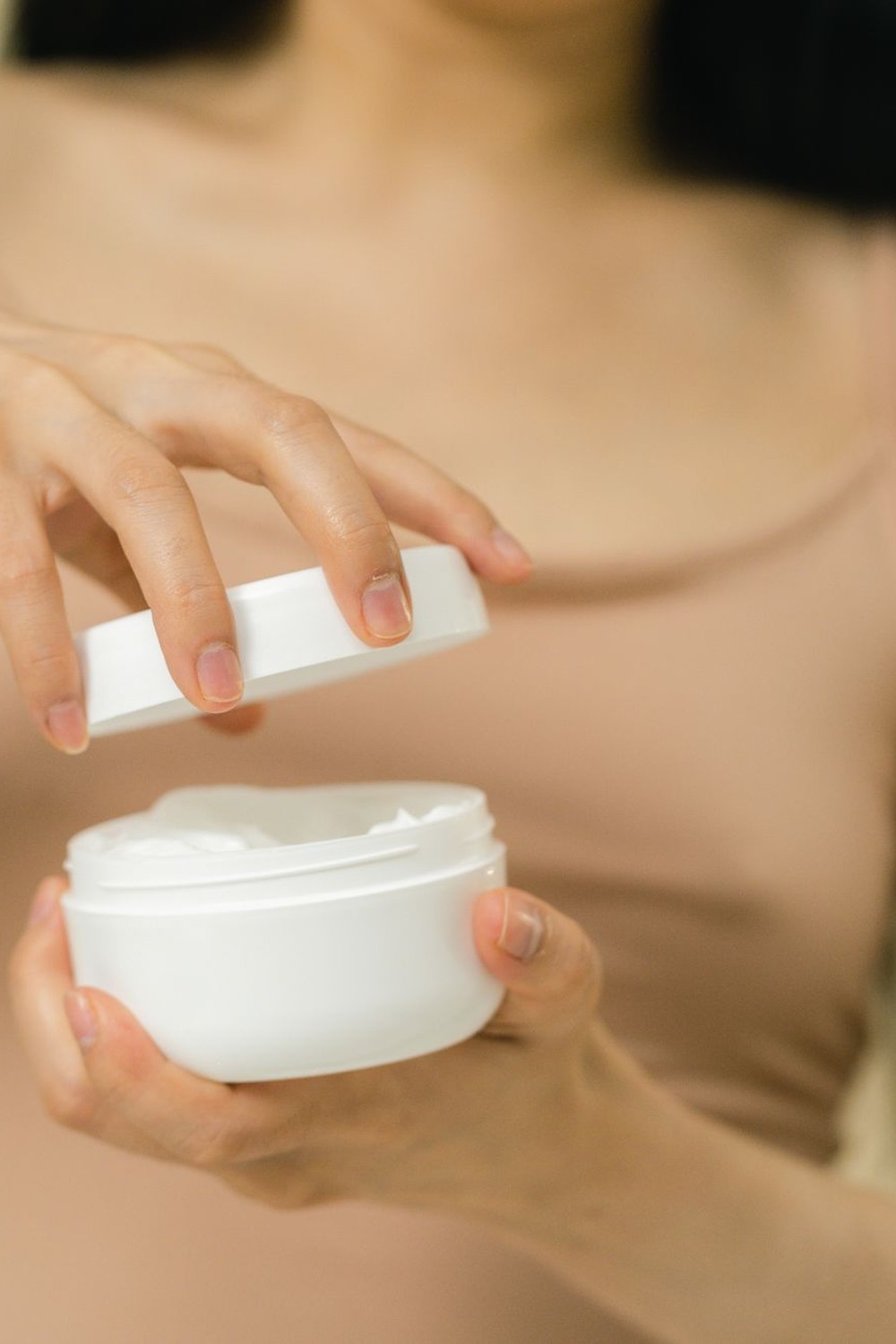
Dry skin is usually thirsty skin. Cold air, hot showers and harsh cleansers pull water out faster than skin can replace it, and the fix is not a fancier serum — it is a moisturizer that both adds water and seals it in. The good news is that drugstore shelves already carry excellent options, and you do not need to spend a lot to get them. This guide explains what to look for on a label, how to apply it so it actually works, and which texture suits which part of your routine. Then it lists picks that suit different dry-skin needs, from very dry winter skin to dry skin that still breaks out.
Apply moisturizer on damp skin within a few minutes of washing — it locks in the water already on your skin, so you need less product for more hydration.
What to look for on the label
Good moisturizers combine three types of ingredients. Humectants like hyaluronic acid and glycerin pull water into the skin. Emollients like squalane and shea butter smooth and soften. Occlusives like petrolatum and dimethicone seal the surface so water cannot escape. Ceramides are worth prioritizing too. They are lipids that occur naturally in skin and help maintain the skin barrier, which is the thin outer layer that keeps moisture in and irritants out. If your barrier is damaged, moisturizer has to work harder to do its job — our skin barrier guide covers that in more depth. For dry or sensitive skin, look for fragrance-free formulas and a shorter ingredient list overall. Fewer ingredients means fewer chances for something in the mix to sting or irritate already-compromised skin.
Lotion vs cream vs ointment: pick the right texture
Not all moisturizers are built the same, and texture matters more than most people think. According to the American Academy of Dermatology, gels are water-based and the lightest option, lotions sit in the middle, creams are thicker with more oil and more hydrating power, and ointments are the thickest and most effective choice for very dry skin. That means the right pick depends on how dry your skin actually is and where you're applying it. A lightweight gel might be plenty for normal-to-oily skin in summer, but if your skin is flaking, tight or cracking, a cream or ointment will do more work. This is also why the "rich cream" and "budget layer" sections below exist as separate steps rather than one product doing everything.
The rich cream: for very dry, tight skin
When skin feels tight, flaky or genuinely uncomfortable, a lightweight lotion will not cut it. CeraVe Moisturizing Cream is a solid pick here — it contains three essential ceramides plus hyaluronic acid, it's fragrance-free, and it comes in a large tub that makes sense for daily use on body and face. If your skin reacts to most things, Cetaphil Moisturizing Cream is a good alternative for sensitive skin that still wants a rich texture. Use a cream like this at night, when you have time for it to absorb, and on the driest winter mornings when a lighter lotion just isn't enough.
The light gel-cream: for dry skin that still breaks out
Dry and breakout-prone is a frustrating combination, because heavy creams can feel too rich and clog pores, while light lotions don't hydrate enough. Neutrogena Hydro Boost Gel-Cream is built for exactly this gap — it's built around hyaluronic acid, it's light, and it absorbs fast without the greasy finish of a dense cream. Pair it with a gentle cleanser rather than anything stripping or heavily foaming. A harsh cleanser undoes a lot of what a good moisturizer is trying to do, and that mismatch is often why "dry but breaking out" skin feels stuck in a loop.
The sensitive-skin pick: when everything stings
Some skin reacts to nearly everything, which makes even basic moisturizing feel like a minefield. Vanicream Moisturizing Cream is fragrance-free, dye-free, and built on a short ingredient list — dermatologists often suggest it for reactive skin for exactly those reasons. La Roche-Posay Toleriane Double Repair Face Moisturizer is another option worth considering, formulated with ceramide-3 and niacinamide. Whatever you pick, patch-test new products behind the ear before using them on your face. And if skin is cracked, bleeding, or itchy enough to keep you awake at night, that's past the point of trying another moisturizer — see a dermatologist.
The budget layer: seal it in with an occlusive
Sometimes moisturizer alone isn't enough, and the fix isn't a different cream — it's an added layer on top. Aquaphor Healing Ointment or Eucerin Original Healing Cream applied over moisturizer at night, a practice often called "slugging," can make a real difference on very dry patches. It helps to understand what this layer is actually doing. Petroleum jelly does not add water on its own — it seals in the moisture already in your skin, so it goes over moisturizer, never instead of it. Use only a pea-sized amount, and stick to the driest areas rather than the whole face. For a full routine built around this kind of layering, see our 5-step winter skincare routine.
How to use it so it actually works
Timing and technique matter almost as much as the product itself. Apply moisturizer right after bathing, while skin is still damp — Cleveland Clinic notes that emollients absorb better on damp skin, ideally within about three minutes of stepping out of the shower. Keep showers to 5–10 minutes in warm water rather than hot, per the AAD, and pat skin dry with a towel instead of rubbing it. Hot water and rough toweling both strip more moisture than they're worth. MedlinePlus recommends moisturizing two to three times a day, or as often as needed — dry skin isn't a one-and-done fix, especially in winter. Use a gentle cleanser only where you actually need it, skip scrubbing, and avoid deodorant soaps and heavily fragranced body washes, which tend to strip the same oils you're trying to replace.
What to skip while skin is very dry
While skin is actively very dry, the AAD advises stopping products that contain alcohol, fragrance, and retinoids. All three can slow recovery or add irritation on top of dryness. One label distinction worth knowing: fragrance-free is not the same as unscented. A product labeled "unscented" can still contain masking chemicals added specifically to cover up other ingredient smells. If your skin is reactive, look for "fragrance-free" on the label, not "unscented."
Face vs body: different needs
The skin on your face is different from the skin on your body, and your moisturizer routine can reflect that. Face creams tend to be formulated with lighter textures and ingredients suited to facial skin, while body creams can afford to be richer since body skin is generally more tolerant. Hands, feet, and lips often need an ointment at night specifically, since these areas lose moisture fast and don't have much natural oil protection. Eyelids are the thinnest skin on the body, and the AAD notes that a little petroleum jelly can help when they're dry and flaky.
Slugging, done right
Slugging — sealing in moisturizer with an occlusive layer overnight — works well when it's used correctly, but a few details matter. Petrolatum seals water in; it does not add water on its own, so it should always go over a moisturizer, not instead of one. Apply it as the last step of your nighttime routine, after any treatment products have fully absorbed. Skip retinoids, acids, and benzoyl peroxide on slugging nights, since the occlusive layer increases how much your skin absorbs — which can turn a normally fine amount of active ingredient into too much. And if you're acne-prone, avoid slugging your entire face. The AAD notes that petroleum jelly on the face may cause breakouts in some people, so test it on a small area first or limit it to dry patches rather than full coverage.
When dry skin is something else
Most dry skin responds to consistent moisturizing within a reasonable amount of time. If yours doesn't — or if you're dealing with persistent cracking, bleeding, or itching severe enough to disturb your sleep — that's a sign it may not be simple dryness. Conditions like eczema can look similar to ordinary dry skin but need different treatment. If you've been moisturizing steadily for weeks with no improvement, or symptoms are getting worse rather than better, see a dermatologist rather than cycling through more over-the-counter products.
Quick questions
How much moisturizer should I use on my face? A blueberry-sized amount is usually enough to cover the whole face without feeling heavy or greasy. How often should I moisturize? MedlinePlus recommends two to three times a day, or as often as your skin needs — dry skin, especially in winter, often needs more frequent application than you'd expect. Do I need a different moisturizer in winter? Often yes. Many people need a richer cream or an added occlusive layer in winter, then switch back to something lighter as humidity rises. Can I use body cream on my face? It's not ideal as a habit. Body creams are often formulated richer than face skin needs, which can feel heavy or contribute to clogged pores on more reactive facial skin. Keep a separate, lighter formula for your face when possible. Does a more expensive moisturizer work better? Not necessarily. The ingredients that actually help dry skin — ceramides, hyaluronic acid, glycerin, petrolatum — show up in budget drugstore formulas just as often as in premium ones. Price is not a reliable indicator of effectiveness. What if my moisturizer stings when I apply it? Stop using it. Stinging usually means an ingredient, often fragrance or alcohol, is irritating your skin rather than helping it. Switch to a fragrance-free option with a shorter ingredient list, and patch-test behind the ear before trying new products on your face. Should I moisturize before or after sunscreen? Moisturizer goes on first, then sunscreen on top. Give the moisturizer a moment to absorb before applying sunscreen — our sunscreen rules guide covers application order and timing in more detail.
Sources and further reading
Written by the Trendora Editorial Team. Sources and further reading: the American Academy of Dermatology (aad.org) — dry skin care guidance, moisturizer texture and ingredient recommendations, petroleum jelly use; the NHS (nhs.uk) — dry skin care and emollient guidance; MedlinePlus (medlineplus.gov) — dry skin self-care; Cleveland Clinic (my.clevelandclinic.org) — petroleum jelly and emollient guidance. ```
General information only, not professional or medical advice.