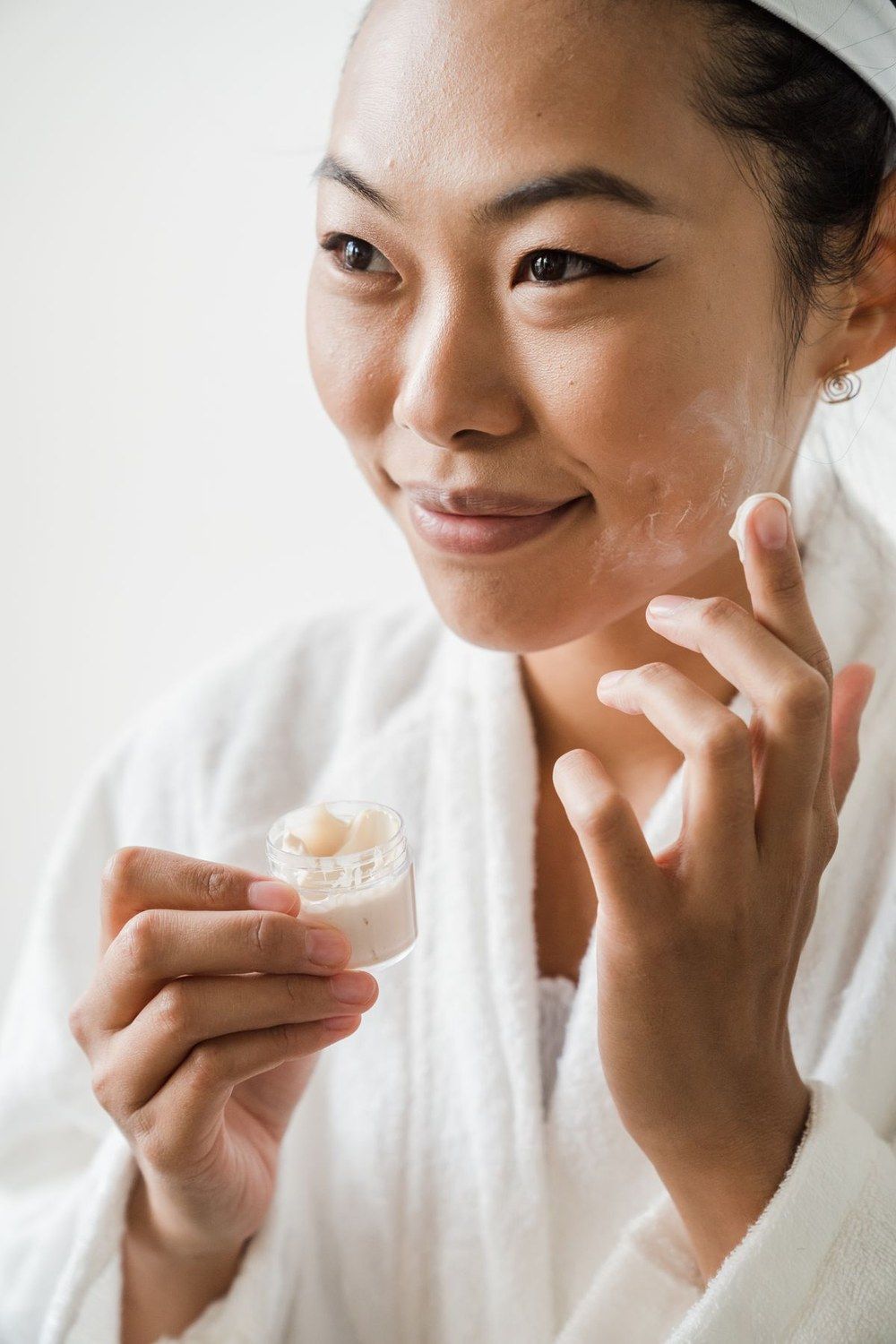
When skin feels tight after washing, flakes show around your nose and chin, and makeup settles into dry patches, the instinct is to scrub and add more products. Dermatologists advise the opposite for most everyday dryness: do less, more gently, and consistently. This 7-day reset is not a cure. It is a barrier-first week: pause what strips or irritates, moisturize correctly on damp skin, protect from the sun, and watch whether skin improves. Less tightness can come within days, but fuller recovery usually takes two to four weeks. Medical caution: This article is general information, not medical advice. If dryness is severe, painful, infected-looking, or does not improve with gentle self-care, see a doctor or dermatologist instead of repeating resets.
For one week, pause strong actives and scrubs. Cleanse gently, moisturize on damp skin twice a day, and protect with sunscreen.
Why skin gets dry and flaky
Dry skin — xerosis — happens when the outer layer loses too much water. That layer is like a wall: cells are bricks, natural fats (lipids) are mortar. When mortar thins, water escapes, irritants enter, and the surface turns rough and flaky. Flakes signal uneven shedding from dryness — not dead skin that must be scrubbed off. Common triggers include: Cold, dry or windy weather and low-humidity indoor air. Central heating, space heaters and fireplaces lower humidity, which is why winter is a frequent trigger. Long, hot showers or baths, and bathing more than once a day. Hot water and scrubbing remove natural oils. The American Academy of Dermatology (AAD) and Mayo Clinic advise short showers — about 5 to 10 minutes — in warm, not hot, water. Harsh soaps, detergents and heavily fragranced cleansers designed to remove oil, which can strip the barrier too. Too many strong actives at once — retinoids, strong exfoliating acids and scrubs layered together — plus drying alcohol or fragrance when skin is already sore. Age and health. Older skin makes less oil and holds water less well. Jobs that keep hands in water or harsh soaps also raise the risk. If dryness follows this seasonal pattern, our 5-step winter skincare routine is the everyday routine to return to after this week. If stinging and sudden sensitivity are the main problem, read our skin barrier guide alongside this plan.
What to stop doing this week
For seven days, set aside: Retinoids, strong exfoliating acids, peels and exfoliating toners Grainy scrubs, rough washcloths, brushes and clay masks on dry areas Anything that stings or burns on application — that feeling is information, not proof a product is working Heavily fragranced products and deodorant or antibacterial soaps on the driest areas Long hot showers, very hot water on the face, and rubbing skin dry A new "rescue" product every day — you will not know what helped or hurt Do not throw paused products away — most can return later, one at a time. This week keep only: a gentle fragrance-free cleanser, a plain fragrance-free cream, morning sunscreen, and lip balm or petroleum jelly for dry patches. Choose "fragrance-free" rather than just "unscented" — unscented products can still contain masking fragrances.
How to moisturize correctly: damp skin and layering order
Technique matters as much as the product: cream applied promptly to damp skin beats the same cream hours later on bone-dry skin. Wash briefly with lukewarm water. Pat — do not rub — so skin stays slightly damp. Moisturize within a few minutes, trapping water already on skin before it evaporates. Hydrating layer first, if you use one. Humectants such as glycerin and hyaluronic acid attract and hold water in the outer layer. Alone in dry air they are not enough — they need a cream over them to seal that water in. Follow with a cream, not a thin lotion, when skin is very dry. Creams and ointments are thicker and generally more moisturizing than lotions. The NHS makes the same point about emollients: lotions spread easily but are less moisturizing, creams suit daytime, and ointments are most moisturizing for very dry skin, especially at night. Seal the driest spots last, if needed. A thin ointment layer such as petroleum jelly over cream can help lips, around the nose, knuckles, elbows and heels. Keep it to patches if you are prone to breakouts. Smooth, do not rub hard, and reapply whenever skin feels dry or tight — especially hands and face after washing. The NHS advises smoothing emollients gently in the direction hair grows, and says they can be used as often as needed. Helpful label types: glycerin or hyaluronic acid (humectants), ceramides and fatty acids (barrier lipids), and petrolatum, dimethicone, mineral oil, lanolin or shea butter (slow water loss). You do not need all of them.
The 7-day reset, day by day
Keep the same routine daily. Take a Day 1 photo in natural light, without makeup, to compare on Day 7.
Days 1–2: Stop and soothe
Morning: Rinse with plain lukewarm water only. Pat dry, leave skin slightly damp, apply moisturizer, then sunscreen if you will be outdoors. Evening: Cleanse once with a gentle, non-foaming or low-foaming fragrance-free cleanser and lukewarm water, using fingertips for 30 to 60 seconds. Rinse, pat dry, moisturize on damp skin. If skin still feels tight after 10 minutes, add a second thin layer of the same cream rather than switching products. Add lip balm, and hand cream after washing and before bed. Showers: 5 to 10 minutes, warm not hot. Use cleanser only where needed on the body, and moisturize while damp. The goal is not perfect skin. It is no new stinging, and a routine simple enough to repeat.
Days 3–5: Rebuild moisture, change nothing else
Morning: Same — water rinse, moisturizer on damp skin, sunscreen. Evening: Same gentle cleanse. If you already own a simple glycerin or hyaluronic acid serum or toner, you may add one thin layer on damp skin before your cream. If you do not own one, skip it — cream on damp skin is the core of the plan, not the extra layer. Do not buy new products mid-week to "boost" the reset. Keep up hand cream after washing, lip balm before bed, and cream on elbows, knees and heels. By Day 4–5 look for less tightness an hour after washing, smaller flakes, and no stinging from moisturizer. If none is happening, do not add exfoliation — check the doctor section.
Days 6–7: Protect and review
Morning: Make sunscreen non-negotiable. Dry skin still needs protection, and sun damage is itself a cause of dry, rough skin. Use broad-spectrum SPF 30 or higher on face, neck, ears and backs of hands, reapplying outdoors as directed. If sunscreen is the step you skip, our guide to sunscreen rules that actually stick covers how much to use, including the two-finger method for face and neck. Evening: Same routine. Compare Day 7 and Day 1 photos in similar light: less tightness, fewer flakes, less stinging? If mostly yes, continue the simple routine another one to three weeks. If no, or skin is worse, get checked.
Bringing actives back after the reset
Only reintroduce actives if skin has felt calm for several days — no stinging from plain moisturizer, no new cracks, flakes clearly reducing. Bring back one product at a time, two or three nights a week at first. Apply retinoids over moisturizer at first if skin has been reactive; wait at least a week before adding a second active. If flakes, burning or tightness return, pause it again — too strong, too frequent, or a poor match is not a test of endurance. Keep exfoliation gentle and infrequent. Scrubbing a still-damaged barrier makes flaking return faster.
When dry skin is more than dry skin: see a doctor
A reset is for ordinary dryness. Get medical advice — from a clinician, pharmacist or dermatologist — if you notice: Dryness lasting despite two to three weeks of consistent gentle self-care, or that keeps returning Skin that becomes inflamed, painful, swollen or warm, or develops open sores, bleeding cracks, pus or yellow crusting — possible signs of infection Itching so uncomfortable you lose sleep or cannot focus on daily activities Large areas of scaly or peeling skin, thick raised scaly plaques, or a spreading rash Dry, thick skin as a side effect of cancer treatment, dialysis or a new medicine Persistent dryness can be part of, or confused with, conditions needing treatment, not cosmetics — eczema, psoriasis, contact dermatitis, and, less commonly, hypothyroidism, diabetes or kidney disease, which Mayo Clinic and Cleveland Clinic list in connection with dry skin. Only a clinician can sort that out. Deep cracks also let bacteria in, raising infection risk.
Frequently asked questions
Why is my skin still dry even when I moisturize every day? Usually the problem is around the moisturizer: a stripping cleanser, a lotion too light, moisturizer applied long after washing to dry skin, a humectant serum with no cream to seal it, hot showers, or too much exfoliation. Switch to a fragrance-free cream on damp skin within minutes of washing, shorten showers, and pause actives for a week before judging. Should I exfoliate flaky skin to remove the flakes? Not by scrubbing during a reset week. Harsh scrubs and strong acids on a damaged barrier usually increase irritation. Moisturize first. Once skin is calm and no longer stings, a gentle exfoliant used infrequently may help remaining roughness. Thick, widespread or returning flakes should be checked, not exfoliated harder. How long does it take for dry, flaky skin to heal? Comfort often improves within 3 to 7 days of stopping irritants and moisturizing on damp skin. Flaking and barrier recovery take longer — commonly two to four weeks, and longer if severe or linked to eczema. Judge Day 7 on direction, not perfect skin. Can drinking more water fix dry skin? Drinking when thirsty supports general health — Mayo Clinic includes it in prevention advice. But dryness is mainly water loss from the outer layer and a weakened barrier. Extra water beyond thirst will not replace damp-skin moisturizing, gentle cleansing and sun protection. Is a cream, a lotion or an ointment best for dry skin? Creams and ointments generally work better than lotions for very dry skin. Lotions are thinner and less moisturizing; creams suit daytime; ointments are thickest, for very dry patches and night use. Can I wear makeup during the reset week? Yes, if it does not sting. Apply over moisturizer and morning sunscreen. Remove gently at night with your gentle cleanser — no scrubbing or harsh wipes on dry areas. If base highlights flakes, less product on those patches looks better than powder. What if a week is not enough? Continue the same routine for a second and third week if skin is slowly improving with no warning signs. Do not escalate to stronger exfoliants. With no improvement after two to three weeks, or worsening at any point, see a doctor or dermatologist.
Sources
Written by the Trendora Editorial Team. Checked against: American Academy of Dermatology — Dermatologists' top tips for relieving dry skin: https://www.aad.org/public/everyday-care/skin-care-basics/dry/dermatologists-tips-relieve-dry-skin Mayo Clinic — Dry skin: Symptoms and causes (updated July 2, 2026): https://www.mayoclinic.org/diseases-conditions/dry-skin/symptoms-causes/syc-20353885 Cleveland Clinic — Dry Skin (Xeroderma): Symptoms, Causes, Treatment & Prevention: https://my.clevelandclinic.org/health/diseases/16940-dry-skin NHS — Emollients: https://www.nhs.uk/conditions/emollients/
General information only, not professional or medical advice.