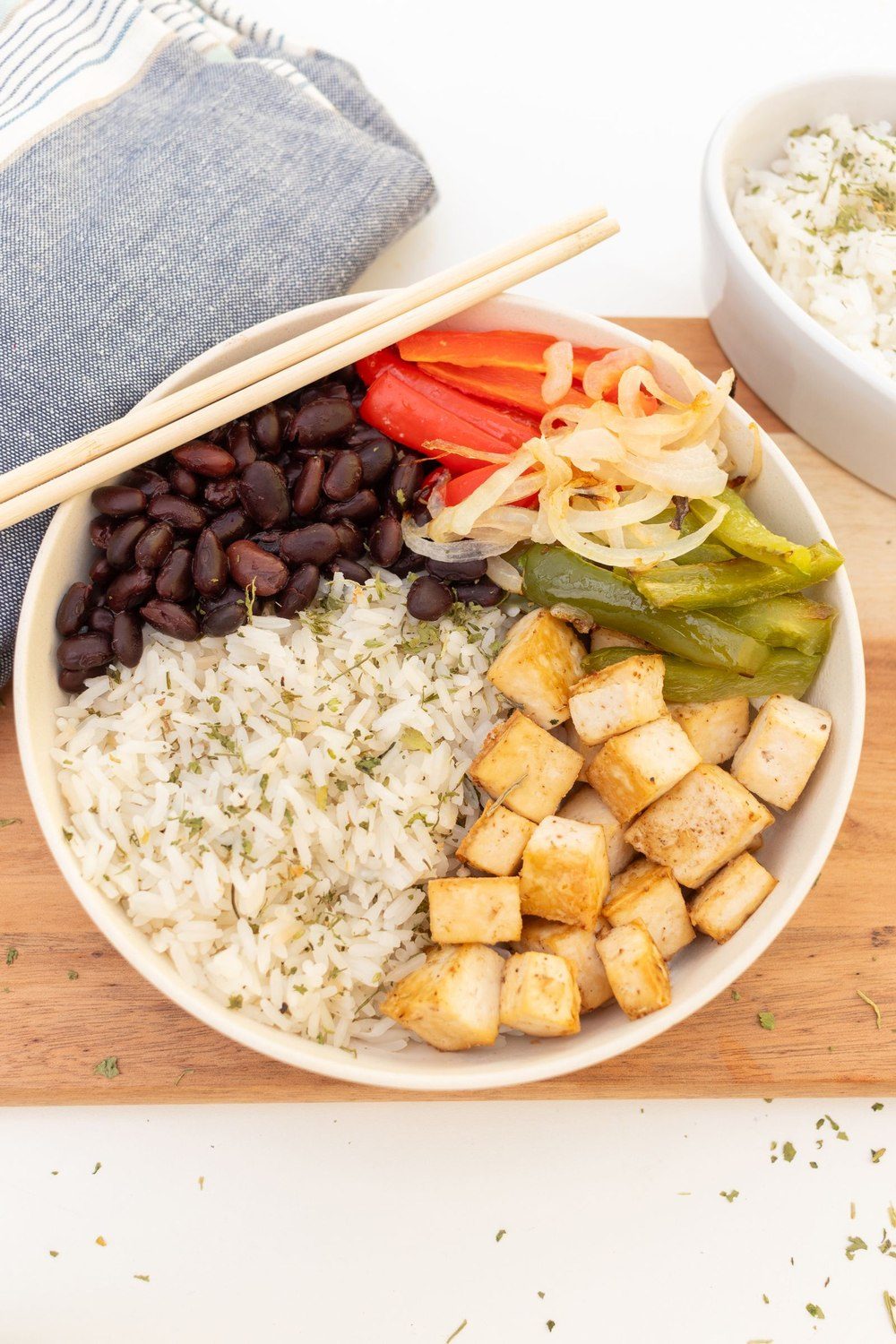
A busy day, no meat, and a protein target to hit — it sounds like a puzzle, but the answer is already in your fridge. Eggs, lentils, tofu, tempeh, paneer and Greek yogurt can build high-protein vegetarian meals in under 15 minutes, as long as you know which ones actually carry the protein and which are just along for the ride. That is where most "high-protein vegetarian" lists go wrong: they quote the protein in dry lentils, or in a portion nobody eats. This guide gives you the fast ideas, the protein numbers that actually matter — checked against the USDA database, in the portions you will really serve — and three complete recipes timed to prove it.
Anchor every meal with one strong source (about 15–20 g protein), add one small booster (3–7 g), and the day takes care of itself.
The numbers that actually matter
All figures below are from USDA FoodData Central, for the food as eaten: Greek yogurt, plain nonfat: about 10 g protein per 100 g — a standard 170 g pot gives about 17 g Eggs: about 6 g per large egg Lentils, cooked: about 9 g per half cup; a full cup gives about 18 g Chickpeas, cooked: about 7 g per half cup; a full cup about 14–15 g Firm tofu: this is the one to check on the label. USDA's firm, calcium-set entry is 17 g per 100 g, but softer and regular blocks run much lower — roughly 10–17 g per 100 g depending on firmness. Silken tofu is lower still. Tempeh: about 19 g per 100 g — the densest everyday plant source on this list Edamame, cooked and shelled: about 12 g per 100 g; a cup gives about 18 g Cottage cheese: about 11–12 g per 100 g Paneer: about 18 g per 100 g (typical values; brands vary) Peanut butter: about 4 g per tablespoon Two habits make these numbers automatic. First, cook double whenever lentils, beans or rice are on — tomorrow's lunch is then already half done. Second, combine two sources in one meal — lentils plus a yogurt sauce, tofu plus edamame — because two modest sources quietly reach a total no single "superfood" has to carry alone.
Three recipes, 15 minutes each
1) Egg and spinach scramble (about 8 minutes, ~20 g protein). Wilt a big handful of spinach in a pan, add two beaten eggs (about 13 g) and 30 g crumbled feta (about 4 g), and serve on a slice of whole-grain toast (about 3 g). Season hard — smoked paprika and black pepper make it taste like a different dish from yesterday's plain eggs. 2) Chickpea crunch salad (about 10 minutes, ~17 g protein). One cup of cooked chickpeas (about 14–15 g) with cucumber, tomato, red onion, lemon and a tablespoon of tahini whisked into the dressing (about 3 g). Canned chickpeas are the weeknight hero here: drain, rinse, done. It keeps for two days of lunches — inside the usual 3-to-4-day leftover window, it is one of the safest meal preps there is. 3) Tofu stir-fry (about 15 minutes, ~20 g protein). Cube 150 g firm tofu (about 18 g at a mid-range 12 g per 100 g — firmer blocks give more), sear it, add frozen vegetables and a soy-garlic sauce, and serve over a cup of microwave rice (about 4 g). Stir in a handful of edamame and you pass 25 g without noticing. All three scale up without thinking: double the scramble for two people, make a big batch of the chickpea salad for lunches, and cook extra rice with the stir-fry for tomorrow. And taste before serving, every time — seasoning is the difference between a recipe you repeat and one you endure.
A sample protein day
Breakfast: a 170 g pot of Greek yogurt with a sprinkle of seeds — about 20 g before you have really woken up. Lunch: the chickpea crunch salad plus a boiled egg on the side — about 23 g. Snack: 100 g cottage cheese on crackers, or a small handful of nuts — about 10–12 g. Dinner: the tofu stir-fry over rice — about 20 g. Total: roughly 75 g from ordinary food — no powders, no shakes, nothing weird. If you train hard, add one more anchor — a second egg, a tempeh portion, a bigger yogurt — rather than redesigning the whole day.
Smart add-ons
Seeds, nuts and beans lift protein in any meal. Add-ons work because they ride along on food you already eat: seeds scattered on salads and soups (a tablespoon of pumpkin seeds adds about 3 g), nuts stirred into oats, beans folded into a pasta sauce, a yogurt sauce over anything grilled, hummus — which is chickpeas doing double duty — spread where butter would go. Think of them as seasoning with benefits: small, daily, and easy to keep up for months, which is what actually moves the total.
The 5-minute pantry: what to always keep
A fast protein meal is really a stocked shelf away. Keep these staples on hand and a 15-minute dinner is within reach even on the nights you have nothing planned. Canned chickpeas and beans need only draining and rinsing, and a can on the shelf is what turns a tired salad into the chickpea crunch salad above. Frozen edamame goes straight from bag to pan or microwave, no thawing required. A block of firm tofu keeps for weeks unopened — check the label for firmness, as explained above, since one block can carry nearly twice the protein of another. Eggs are the fastest anchor in the kitchen, ready in minutes any way you cook them. Greek yogurt and cottage cheese cover breakfast or a snack without touching the stove. Peanut butter and oats round things out: neither needs cooking, and both are ready the moment hunger is.
Eating out and takeaway without losing protein
The anchor-plus-booster rule from the start of this guide works exactly the same when you are not the one cooking: find one strong protein source on the menu, then add a smaller one if you can. A salad or grain bowl is an easy win — ask for egg, tofu or beans added on top, and it goes from a side dish to a real meal. A burrito bowl built on a base of beans does the same job without needing meat at all. Lentil soup with a side of bread is a solid, warming choice when it is on offer, and it travels well as leftovers too. When you are away from home and breakfast is the gap, a yogurt-based option — plain or Greek yogurt with fruit or granola — is almost always on a menu or in a shop, and it does the same work as the yogurt pot in your sample day at home.
How much protein do you actually need?
Government guidance for generally healthy adults starts at about 0.8 grams per kilogram of body weight a day — that is the RDA, a floor designed to prevent deficiency, not a performance target. People who train regularly need more: the joint position stand of the Academy of Nutrition and Dietetics, Dietitians of Canada and the American College of Sports Medicine puts athletes at 1.2 to 2.0 grams per kilogram a day. For a 70 kg person, that is the difference between about 56 g (the floor) and roughly 84–140 g (the training range). The sample day above lands near the bottom of the training range from food alone — which is exactly the point of this guide. And if you have a kidney condition, or any health issue where protein intake matters, check your personal target with a doctor first.
The two gaps vegetarians should not ignore
Vitamin B12. Protein is not the only planning a meat-free diet needs. The NIH Office of Dietary Supplements is blunt: B12 is not naturally present in plant foods. If you eat eggs and dairy regularly you are likely covered; if you are vegan, the reliable sources are fortified foods (some plant milks, cereals and nutritional yeasts — check the label) or a supplement. Adults need about 2.4 micrograms a day. Iron is the quieter one: plant iron absorbs less well than iron from meat, and eating a vitamin C food in the same meal — peppers, tomatoes, citrus, a squeeze of lemon over those lentils — genuinely helps absorption. Neither gap is a reason to panic; both are reasons to plan once and stop worrying.
Keep it tasty
Protein meals fail when they are bland. Keep garlic, lemon, chili flakes, soy sauce and fresh herbs ready; they turn the same lentils or tofu into a different meal every day of the week. Protein matters most around training — pair these meals with our beginner home workout and recovery gets noticeably easier.
Five mistakes that keep vegetarian protein low
Quoting dry numbers. "Lentils have 25 g of protein" is true of dry lentils per 100 g — cooked, the same lentils give about 9 g per 100 g because of the water they absorb. Always check whether a number is dry or cooked. Saving all your protein for dinner. Three modest anchors beat one giant one — your body uses protein across the day, and breakfast is where most vegetarian days leak. Trusting the word "tofu" without the label. Firmness changes everything: one block can carry nearly twice the protein of another. Cheese as the only strategy. Cheese helps, but leaning on it at every meal loads up saturated fat and salt long before it loads up protein. Rotate eggs, legumes, soy and yogurt. Forgetting B12 because protein felt handled. Different nutrient, different plan — see above.
Quick questions
Is plant protein as good as meat? Across a varied day, yes. Most plant sources are low in one essential amino acid or another, but different sources cover each other's gaps — and the Academy of Nutrition and Dietetics' position is that you do not need to combine them carefully at the same meal; eating a variety across the day does the job. Soy foods (tofu, tempeh, edamame) are the exception that needs no help: their protein is complete on its own. Do I need protein powder? No. Powder is convenience, not magic — our 7-day balanced meal plan reaches solid totals from normal groceries, and so does the sample day above. A powder earns its place only when your schedule genuinely beats your kitchen. How much protein do I actually need? Start with the floor: about 0.8 g per kilogram of body weight a day for generally healthy adults. If you train regularly, sports-medicine guidance (the Academy of Nutrition and Dietetics, Dietitians of Canada and ACSM) puts the useful range at 1.2–2.0 g per kilogram. Treat both as planning guides, not numbers to obsess over. Are eggs and dairy "cheating" for a vegetarian? No — this is a vegetarian guide, not a vegan one. Eggs and dairy are standard vegetarian protein. If you are vegan, swap the yogurt for a fortified soy yogurt, the feta and cottage cheese for extra tofu, tempeh or edamame, and take the B12 note above seriously. Can I build muscle on vegetarian protein? Yes — the research behind the sports-protein ranges was not limited to meat eaters; what matters is hitting your daily total with enough overall food. The sample day here reaches about 75 g; a serious training target usually means adding one more anchor meal or snack, not changing what you eat. Is too much protein harmful? For healthy kidneys, intakes in the ranges above are considered safe by the bodies that set them, and there is no official upper limit for protein. The caution is for people with kidney disease or other conditions where a doctor has set a personal limit — follow that instead of any guide, including this one. What is the cheapest high-protein vegetarian food? Dried lentils and beans are consistently the cheapest protein per gram in cost-per-gram comparisons, with eggs close behind as another cheap option. Exact prices vary by shop and country, so this guide won't quote dollar figures — but a bag of dried lentils plus a carton of eggs covers most of a week's protein for very little. How do I hit protein without cooking every day? Batch-cook a pot of lentils or beans once — the "cook double" habit above means tonight's cooking covers tomorrow too — and the chickpea crunch salad already keeps for two days of lunches. For the days in between, lean on no-cook anchors: Greek yogurt, cottage cheese, a boiled egg, or peanut butter on toast.
Sources and further reading
Written by the Trendora Editorial Team. Sources and further reading: USDA FoodData Central — every protein figure in this guide (https://fdc.nal.usda.gov); Thomas DT, Erdman KA, Burke LM, "Position of the Academy of Nutrition and Dietetics, Dietitians of Canada, and the American College of Sports Medicine: Nutrition and Athletic Performance," Medicine & Science in Sports & Exercise, 2016 — the 1.2–2.0 g/kg athlete range; NIH Office of Dietary Supplements — Vitamin B12 fact sheet (https://ods.od.nih.gov/factsheets/VitaminB12-Consumer/); Harvard Health (https://www.health.harvard.edu) and MyPlate (https://www.myplate.gov) — protein foods and balanced plates.
General information only, not professional or medical advice.