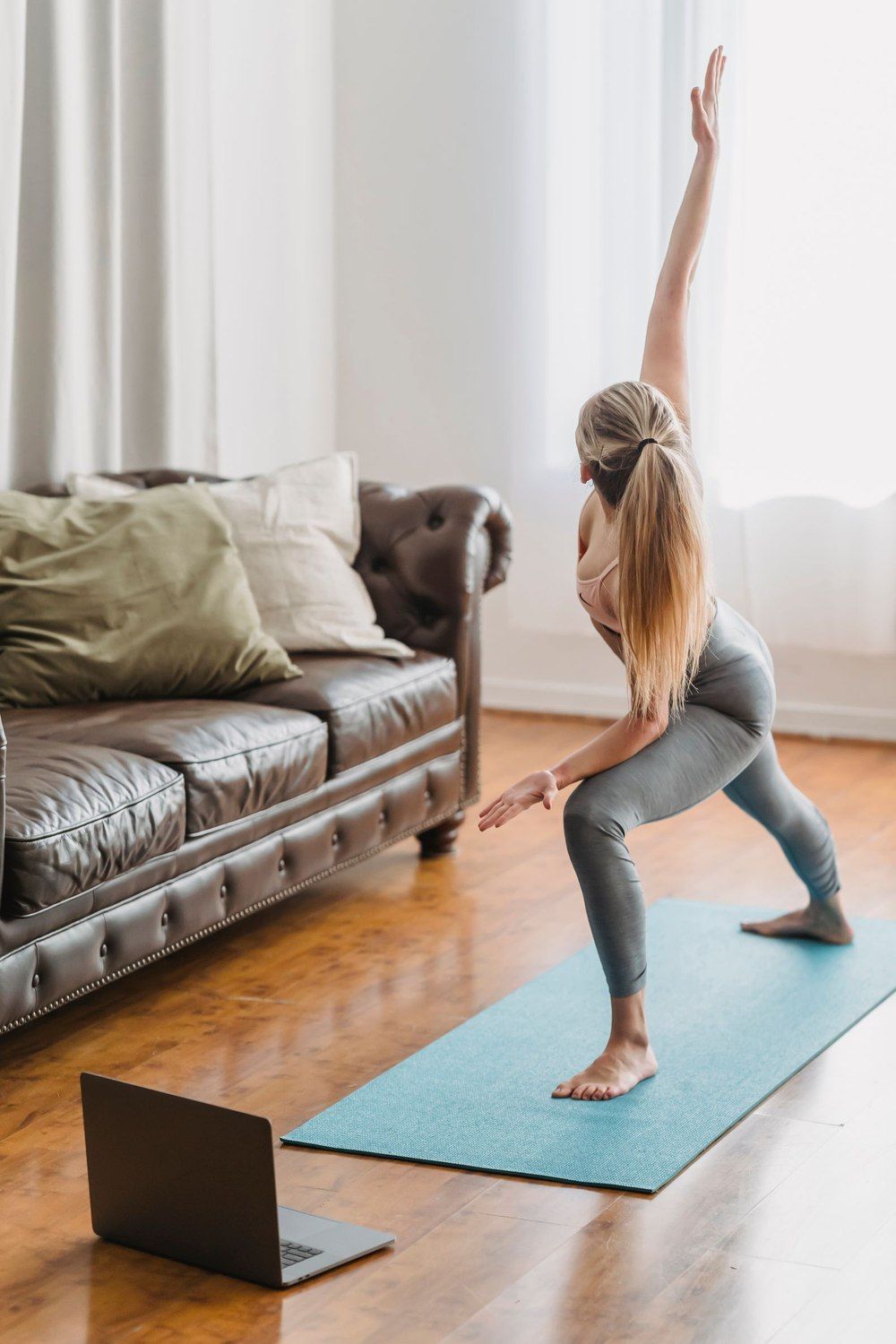
No gym, no equipment, and a schedule with barely 20 spare minutes — that is exactly who this routine is built for. It is a gentle full-body workout you can do in your room: four moves, two or three rounds, three times a week. Nothing here needs buying, downloading or talent — just a floor, a wall, and the willingness to start smaller than your pride wants to. This guide walks you through the routine step by step, the form cues that keep it safe, why your muscles will probably ache on day two (and why that is normal), and a four-week plan that builds from about 17 minutes to the full 20.
Warm up for 5 minutes, do the four moves as a circuit for two rounds (three when you are ready), stretch for 2–3 minutes at the end. Three sessions a week, never on back-to-back days.
The routine, step by step
Warm-up (about 5 minutes). March in place for a minute, then arm circles, easy hip hinges and a few slow, shallow squats. Exercise guidance from the American College of Sports Medicine (ACSM) puts a proper warm-up at 5 to 10 minutes of light activity — it raises your temperature and rehearses the movements, and skipping it is the most common beginner mistake there is. You should finish the warm-up warm and breathing a little faster, not tired. The circuit. Do the four moves back to back, resting 30–60 seconds between them, then rest a full minute and repeat: Squats × 12 Push-ups × 8 (wall, counter or knees — see the ladder below) Glute bridges × 12 Plank, 20–30 seconds Two rounds plus the warm-up and stretch take about 17 minutes — perfect for your first weeks. Three rounds add up to about 20 minutes, which is the goal by week 3 or 4. The stretch itself is 2–3 minutes: hamstrings, quads, chest and shoulders, about 30 seconds each. If you only have 10 minutes on a bad day, do the warm-up and one round. A short session keeps the habit alive, and the habit is the whole program.
Form cues for each move
Squats: feet about hip-width, chest up, sit your hips back like you are aiming for a chair, and let your knees track over your toes. Keep your weight through your whole foot, not just your toes. Push-ups: body in one straight line from head to knees (or heels), hands under shoulders, lower with control — if your hips sag, make it easier, do not push through ugly reps. Glute bridges: feet flat, squeeze your glutes to lift, pause one second at the top, then lower slowly. Plank: elbows under shoulders, ribs down, glutes tight — a shorter plank with good form beats a long, shaky one every time. In every move, breathe out on the effort; holding your breath is a habit to drop early. The push-up ladder — every rung is a real push-up at a kinder angle: wall → countertop or table edge → knees on the floor → full push-up. Most beginners move down one rung every week or two. When you can finish 8 clean reps at one rung twice in a row, try the next.
Slow down, then check your form
Move slowly and stop a set when your form breaks — tired muscles are fine, sloppy reps are not. The ACSM's beginner guidance is built on exactly this: 1–3 sets of 8–12 controlled repetitions, 2–3 non-consecutive days a week, learning technique before load. Film yourself once a week with your phone; small fixes to squat depth or plank position make the workout safer and more effective, and the video does not care about your feelings — which is what makes it useful.
Your first four weeks
Week 1: 2 rounds, 3 sessions. Learn the moves; finish every session feeling you could do a little more Week 2: 2 rounds, 3 sessions. Slow each rep down; own the form Week 3: 3 rounds, 3 sessions. Add the third round, or stay at 2 rounds with slower reps Week 4: 3 rounds, 3 sessions. Try one rung harder on push-ups; add 2 reps to squats and bridges Progress is adding a little at a time — if you finish smiling, you picked the right level. The signal to progress is boring and reliable: when you can complete every rep with good form two sessions in a row, make one thing slightly harder next time. Judge the routine the way we judge any new habit in our viral glow-up habits guide: after two honest weeks, not two days.
Where this fits in the official guidelines
The CDC and the U.S. Physical Activity Guidelines for Americans ask adults for two things each week: 150 minutes of moderate-intensity activity (brisk walking counts) and muscle-strengthening activity on at least 2 days. This routine covers the strength half properly — three days beats the minimum — and each session also chips roughly 20 minutes toward the activity total. Add walking on your rest days and the two halves meet: three workouts plus a daily walk is a genuinely guideline-complete week. And the CDC's most encouraging line is worth remembering on hard days: some physical activity is better than none, and every minute counts toward the 150.
Stay consistent
Pick fixed days — Monday, Wednesday, Friday is the classic for a reason: a rest day always sits between sessions, which matters because the ACSM advises about 48 hours before working the same muscles hard again. Fuel helps more than motivation: a normal balanced meal an hour or two before, or a small snack if you train early. Our 7-day meal plan and 15-minute protein meals were built to sit next to a routine exactly like this one. On rest days, keep a walk in the diary — it keeps the habit warm without stealing recovery.
Sore on day two? Read this before you quit
The ache that arrives 24 to 72 hours after a new workout has a name — delayed onset muscle soreness, or DOMS — and it is the single most common reason beginners quit in week one. Three things worth knowing. First, it is normal: it comes from tiny, repairable disruption in muscle fibres that are not used to the work, especially movements where the muscle lengthens under load, like the way down in a squat. Second, it is not lactic acid — that clears from your muscles within about an hour of finishing. Third, it fades fast: soreness typically peaks around day two and settles within three to five days, and the same workout next week will leave you far less sore. Gentle movement, sleep and normal meals help more than lying perfectly still. What DOMS is not is a score: a workout does not have to leave you sore to have worked, and chasing soreness is a reliable way to get hurt.
Safety: pain versus effort
Muscles that burn and shake during a set are normal effort. Sharp pain, joint pain, dizziness, or pain that changes how you move are stop signals — end the set, and if it keeps happening, get it checked before your next session. Stop and seek medical advice promptly for chest pain or pressure, severe breathlessness out of proportion to the effort, or feeling faint. Check with a doctor before starting if you are pregnant, recovering from an injury, or managing a health condition — and the CDC adds that anyone who has been inactive, has a disability, or has a chronic condition such as heart disease, arthritis or diabetes should talk to their doctor about the types and amounts of activity that are right for them. Build rest in: muscles get stronger between workouts, not during them, so keep at least one easy day between sessions.
Five mistakes that stall beginners
Skipping the warm-up to save time. Five minutes of marching is not the optional part — it is the part that makes the other fifteen safe. Training every day because week one felt good. Same muscles need their rest day; enthusiasm is not a recovery strategy. Rushing reps. Fast, bouncy squats train momentum, not muscle. Slow down until the last two reps feel genuinely hard. Judging the workout by soreness. See above — soreness measures novelty, not quality. Quitting after one missed week. Restart one level easier and you lose almost nothing. The only real failure mode is stopping entirely.
Quick questions
Is 20 minutes of exercise a day actually enough? It is a real start, and for strength it is plenty: this routine three times a week exceeds the guidelines' 2-day muscle-strengthening minimum. For the full picture, pair it with walking to build toward the CDC's 150 weekly minutes of moderate activity — and remember the guidelines themselves say some activity beats none, so a 10-minute day still counts. How many days a week should a beginner work out? Two to three, on non-consecutive days. That matches both the CDC minimum for strengthening (2 days) and the ACSM's beginner guidance (2–3 days, 1–3 sets of 8–12 reps), with rest days in between so the same muscles get about 48 hours to recover. I cannot do a push-up yet — what instead? Start against a wall, then a table edge, then the floor on your knees. Each step is a real push-up at a kinder angle, and most beginners move down one level every week or two. Why am I sore two days after, not the next morning? That delay is the definition of DOMS — it typically builds over 24–72 hours and fades within about three to five days. It is a normal response to unfamiliar exercise, it is not lactic acid, and it gets milder every time you repeat the workout. Train gently through mild soreness if you can move normally; rest if it changes how you walk or bend. How soon will I notice a difference? Energy and sleep often improve in the first two weeks; strength you can feel — stairs getting easier, bags feeling lighter — usually shows up around weeks 4 to 6. What if I miss a whole week? Just restart one level easier: two rounds instead of three, fewer reps. A missed week costs you almost nothing; quitting over it costs you everything. Do I need any equipment later? Not for this routine to work. When bodyweight stops feeling challenging — usually a few months in — a resistance band or a backpack with books adds load for almost no money. Form first, always.
Sources and further reading
Written by the Trendora Editorial Team. Sources and further reading: CDC, "Adding Physical Activity as an Adult" — 150 minutes of moderate activity plus 2 days of muscle strengthening a week, and when to check with a doctor (https://www.cdc.gov/physical-activity-basics/adding-adults/index.html); U.S. Department of Health and Human Services, Physical Activity Guidelines for Americans, 2nd edition; American College of Sports Medicine — beginner resistance-training guidance (2–3 non-consecutive days a week, 1–3 sets of 8–12 repetitions, 5–10-minute warm-up) and progression principles (https://www.acsm.org); the Mayo Clinic (https://www.mayoclinic.org) — beginner fitness and exercise safety basics.
General information only, not professional or medical advice.